One of the most important skills for any angler is learning How to String a Fishing Pole correctly. When you understand how to attach a fishing line to a fishing pole the right way, you improve your technique and increase your chances of catching more fish. No matter your experience level, this skill plays a key role in your fishing journey.
If you done it correctly just will result in line breakage, tangles, and poor casting. In this article, you are going through every stage of the process from start to end. Let’s explore it together:
Stringing a Pole (Step-by-Step Method)
The process of threading the fishing line through a rod and preparing the reel is called stringing the pole. In the guide, the process of stringing is mentioned in step-by-step instructions. If you donate correctly, you will have no trouble while tying your fishing rod. Let’s get into:
Step 01: Choosing the Right Fishing Line
Firstly, it’s important to select a suitable fishing line. It’s an important step for you set up before stringing your fishing pole. The main thing is that the fishing experience can be affected by various materials, such as the strength of the fishing line. If you are looking for common fishing line material other than braided lines, Fluorocarbons, and monofilament are the best.
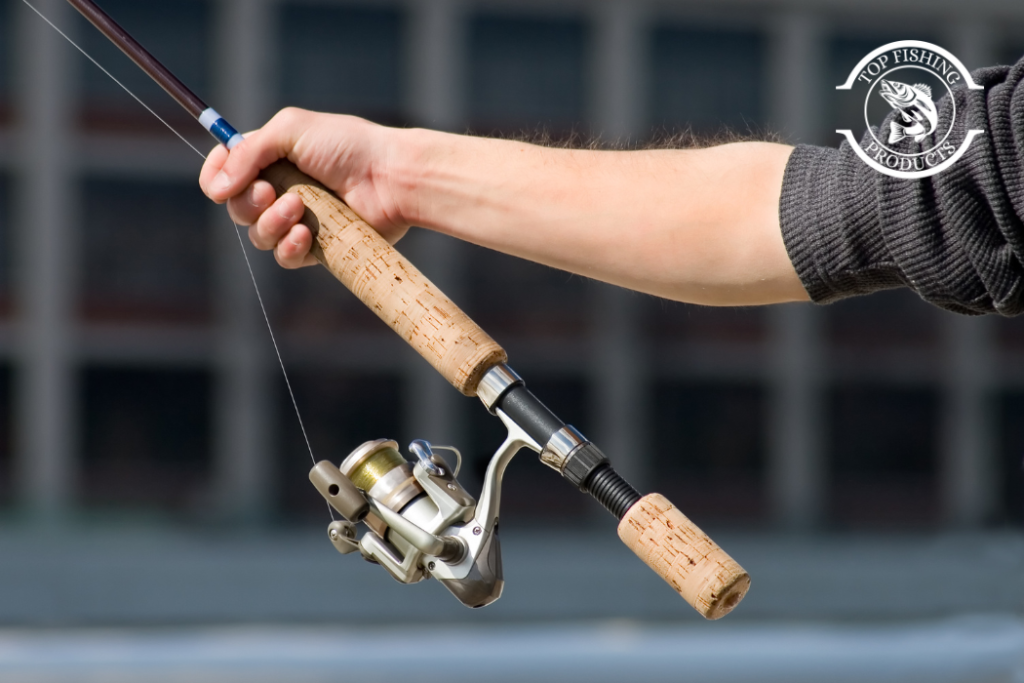
Depending on the kind of fishing you are doing, each variety offers advantages of its own. Monofilament is the most popular, most accessible, and therefore suitable for beginners. While braided lines are extremely durable and flexible, fluorocarbon works well in clear waters since it is invisible underwater. Depending on the kind of fish you are targeting and your fishing style, select a line.
Step 02: Gathering the Necessary Tools
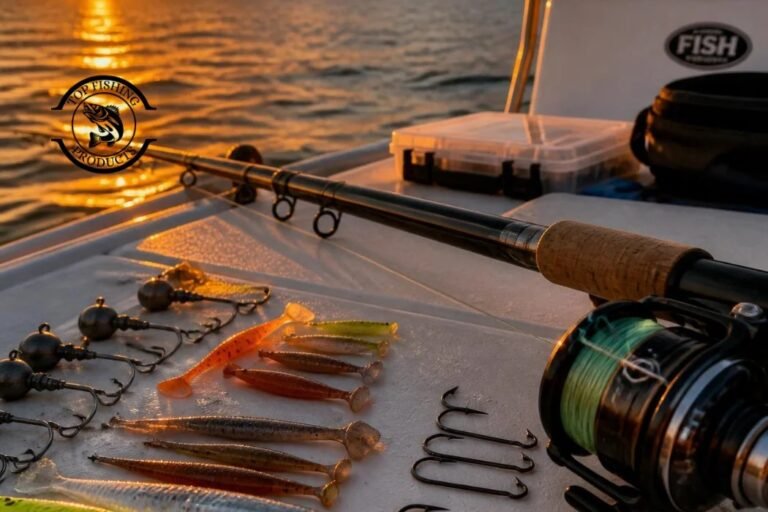
A few important supplies needed to string a fishing pole are a fishing rod and reel, of course, and a fishing line suitable for your kind of fishing, and a pair of scissors or line cutters to remove any extra line. Before starting, make sure the spinning reel is securely attached to the rod.
While you thread your fishing line onto the pole, a line spool holder will help keep it tidy and clear of knots. The process will go more quickly and smoothly if all these tools are available. Before starting the process, it is always a good idea to look for any damage or kinks in the line.
Step 03: Attaching the Reel to the Rod
You need to attach a reel to the rod to string the fishing pole. This is an important step because it guarantees that your reel is safe and won’t cause any issues. The part that holds the reel in place is called the reel seat, and it is found on the majority of modern rods. First, insert the foot of the reel into the reel seat.
After that, tighten the locking rings on both sides of the reel foot to secure it. Verify that the reel is pointing in the correct direction. For right-handed fishermen, the handle is typically on the right side, while for left-handed anglers, it is on the left. It’s time to proceed to the threading line when the reel is attached.
Step 04: Preparing the Fishing Line
The next step is to prepare your fishing line after securing your reel to your rod. Remove any remaining packing or covering tape from your spool of fishing line. To avoid fishing line tangles, place your spool on a level surface or use a line spool holder.
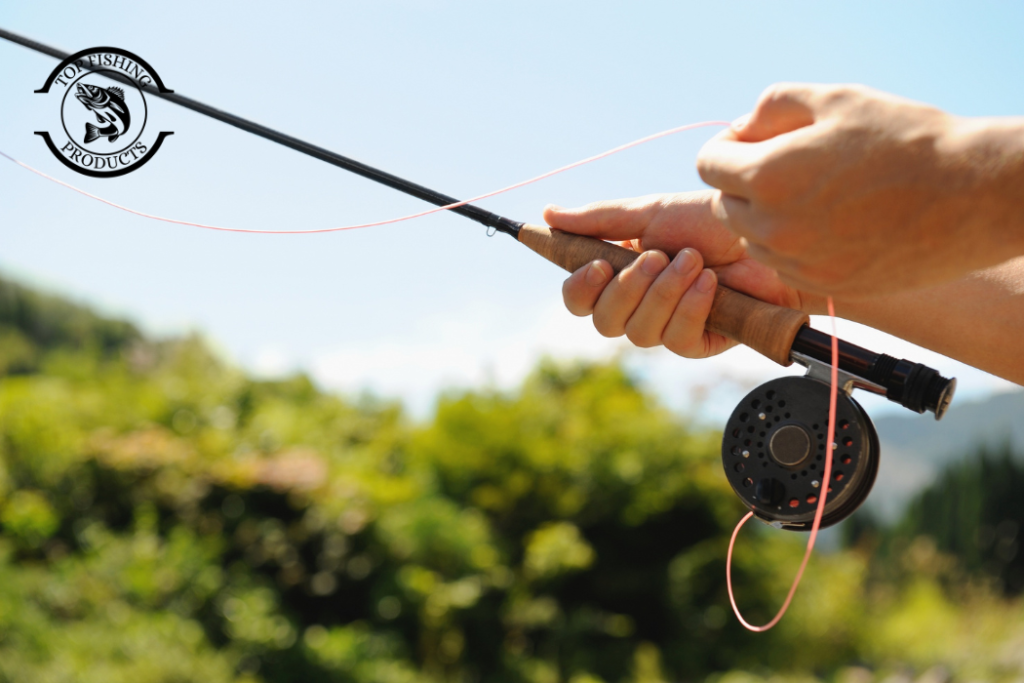
Make sure your spool is right-side up, which means the label or packing should be facing up. This will ensure that your fishing line is coming off your spool correctly. You will have trouble casting your line if it is twisted or coming off reverse.
Step 05: Threading the Line Through the Guides
Now is the time to use the fishing rod guides to pass the fishing line through. When casting fishing rods, the guides, small rings along the rods, help identify the direction of the fishing line. Using the guide that is furthest away from the fishing reels is the first step in passing the fishing line through the guides.
It involves using the fishing poles to pass the fishing line through the guide. It’s important to make sure the fishing line doesn’t twist when it travels through the guides. However, it is important to carefully remove the fishing line and repeat the procedure if it becomes tangled or jammed in the guides.
Step 06: Tying the Line to the Reel
The line must be attached to the reel after it has been threaded through each guide. An arbor knot is usually needed to secure the line to the reel. This is done by making an overhand knot after passing the fishing line’s end around the reel’s spool. To make sure the line is in place, a second knot is then tied on top of the first.
To make sure there are no loose lines, the knot is then tightened. After that, any extra line from the knot is cut with a line cutter or scissors. The knot is quite important because if it is not drawn tightly, the line may fall off, making it impossible to cast the line or reel in the fish.
Step 07: Spooling the Line onto the Reel
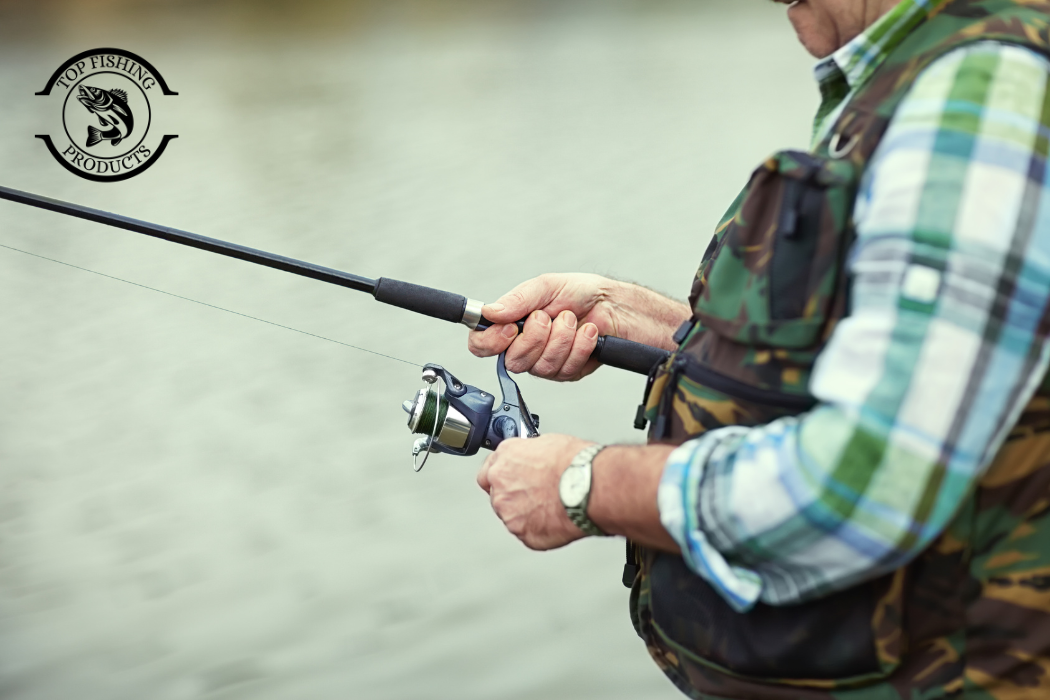
It’s time to start pulling the line now that you have a strong grip on the reel. It will take some time to complete this process. You must first grasp the spool that holds your line. Make sure your line hits evenly on the reel as you start to reel it in. To maintain your line taut, you may put a little pressure on it.
By doing this, you can prevent any pockets from developing in your spool. Spool your line until it is approximately 1/8 inch from the edge. Keep in mind that if you fill your spool too full, your line will spill out when you throw. Cut the line from your spool once you have spooled your reel to the desired length.
Step 08: Checking the Tension and Adjusting the Reel Drag
It is important to check the strength and adjust the drag on the reel once the line has been attached to it. The drag is the part of the reel that controls how easily a hooked fish pulls the line off the spool. If you have your drag adjusted too loosely, a fish bite could break the line. However, if it is adjusted too tightly, you run the risk of the fish escaping or damaging the reel.
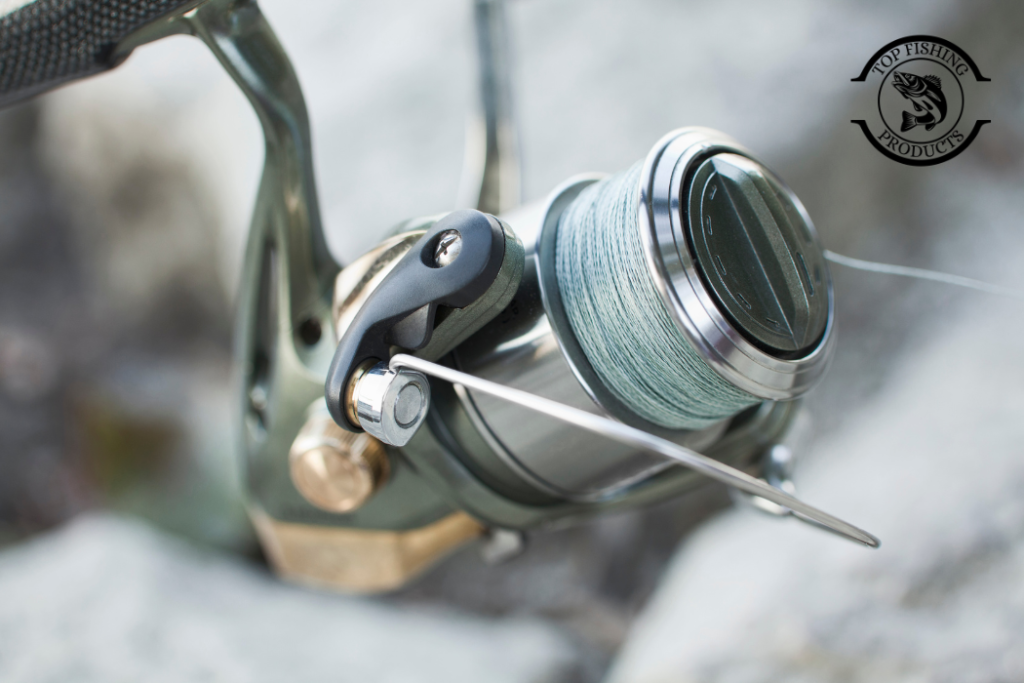
You should adjust the drag by turning the reel’s drag knob until the desired tension is achieved. It should be both tight enough to prevent the line from coming off too easily and loose enough to allow the fish to pull when necessary. One of the most important steps in getting things to function properly is this one.
Step 09: Testing the Fishing Pole Setup
After putting the drag on the reel and stringing your fishing pole, it’s time to test the setup. Crank the reel a few times while holding the rod in your hands to check if the line is moving smoothly. Additionally, make sure the reel is working smoothly and that the line is free of knots and twists.
You can observe how the line behaves by practicing throwing in an open area. You are prepared if everything goes according to plan. Before you touch the water, you can always readjust the line and reel if something disturbs you.
Avoiding Common Mistakes When Stringing Your Fishing Pole
While stringing a fishing pole may seem like an easy task, there are a few frequent mistakes that can make or ruin your fishing experience. Incorrect spooling of the fishing line onto the reel is likely the most common mistake. When attempting to cast, the line becomes tangled easily if it is twisted or packed too loosely.
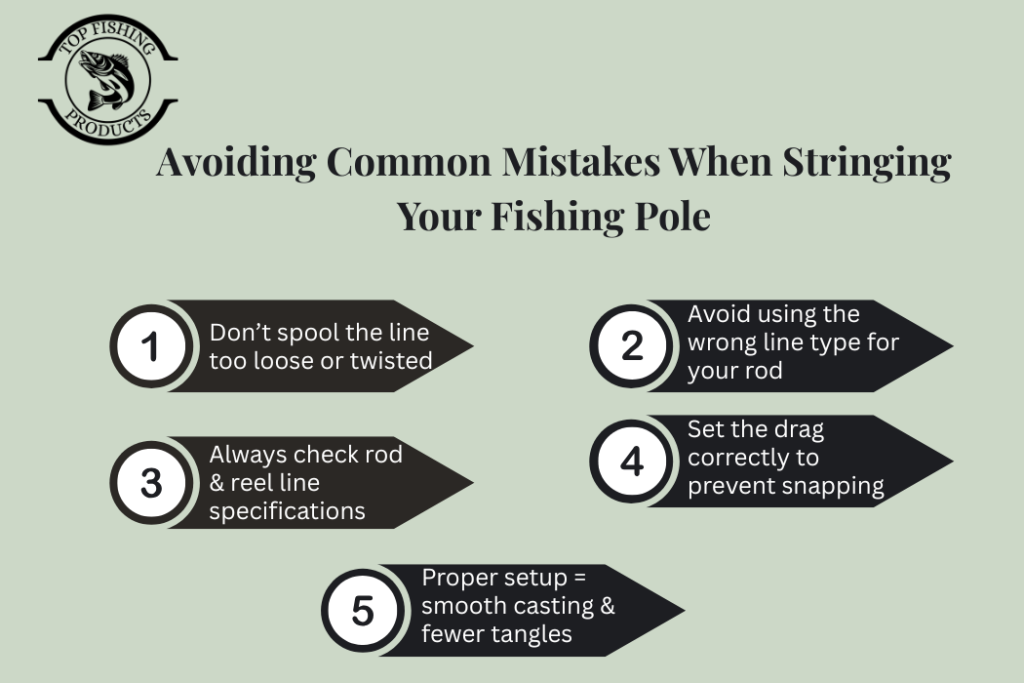
Using the incorrect kind of line for your rod or fishing conditions is another mistake. To ensure you are using the correct line, always refer to the specifications on your rod and reel. In addition, your line may snap or twist if the drag is not set right. You can avoid a great deal of frustration when out on the lake by paying attention to these few small issues.
How to Properly Maintain Your Fishing Line
To keep your fishing pole effective and long-lasting, you must cover the fishing line after setting it up. Always look for color change or cracks in the line. Before your next fishing trip, think about replacing the line if it starts to weaken. To prevent the line from becoming weaker over time.
Store your fishing pole with the line properly spooled and keep it out of direct sunshine and high temperatures. After fishing in saltwater, rinse the line frequently with freshwater to avoid corrosion. Your fishing line’s lifespan and performance can both be extended with proper maintenance.
How to String a Fishing Pole for Different Types of Reels
Different kinds of reels require different fishing pole stringing procedures. For example, the fishing line must be spooled upward for spinning reels, while the label must be facing down for baitcasting reels. The procedure for the fly reel then involves inserting the line through the guides.
Use the loop knot technique to secure it to the reel. For smooth casting, it’s also important to make sure each reel has the proper tension. You can successfully tie your fishing pole for successful fishing results by being aware of the variables.
How to Handle Fishing Line Tangles
Fishing line tangles may be really annoying, especially if you want to enjoy a peaceful outdoor experience. It’s important to take action to remove the mess rather than becoming frustrated when your line gets knotted. If your line gets tangled, you can untangle it by gradually pulling it out piece by bit until the knots are removed.
The knots will become even more knotted if you attempt to forcefully reel in the line. Spooling your fishing line correctly while setting up your reel is another strategy to keep your line from becoming tangled. You can avoid bunching when reeling in your line by keeping it spread.
Upgrading Your Fishing Gear: When to Replace Your Line
Maintaining the condition of your fishing pole greatly depends on knowing when to change your fishing line. This is because the fishing line may have damaged from wear and use, exposure to the sun, or exposure to saltwater if it has been a while since you last updated it. When the fishing line is frayed, weak, and easily broken by hand, or the casting range has been impacted.
These are a few signs that it’s time to replace it. Replacing your fishing line at the start of a new season is always advised. Changing your fishing line regularly helps prevent a huge catch from disappearing because the line was weak or outdated, especially if you’re targeting larger fish or in difficult conditions.
Conclusion
If you follow these steps, How to String a Fishing Pole will feel effortless, even if it seems difficult at first. After completing this article, you should feel confident stringing your fishing pole on your own, and your skills will continue to improve with practice.
This is an important part of fishing and will certainly improve your fishing experience, so it will not only help those who are new to the sport but also those who have experience with it.
Frequently Asked Questions:
1. How tight should the fishing line be when spooling?
The line should have moderate tension, not too tight to avoid breakage, but not too loose to prevent tangling. Apply slight resistance as you spool it.
2. Can I use any type of fishing line for my rod and reel?
No, always match the line type and weight to your rod and reel. Light rods need lighter lines, while heavier rods require thicker lines.
3. How do I prevent fishing line from getting tangled?
Ensure the line is properly spooled without twists. Keep the line taut when reeling and avoid overfilling the reel.
4. How often should I replace the fishing line?
Replace the line at least once a season or sooner if it shows signs of wear. In saltwater, replace it more often.
5. What should I do if my fishing line snaps during fishing?
If the line snaps, check for leftover line and re-tie the hook. If it’s completely broken, re-string the reel and continue fishing.