Beach fishing is one of the easiest and most relaxing ways to start fishing. To go beach fishing, you don’t need a boat or expensive tools. A fishing gear, a rod, a reel, and some bait are all you need. Learning about beach fishing rigs for beginners is very important because a rig is made up of your leader, hook, sinker, and line. It connects you directly to the fish. Your chances of catching fish are much higher if your setup is strong and simple. In this guide, everything about beach fishing rigs for beginners will be explained in clear and easy language.
You will discover the definition of a beach fishing rig, its importance, and the setup of three basic beginner fishing rigs. The Fish Finder, Paternoster, and Knocker will be the three most important fishing rigs for beginners. By the end of this article, you will be able to make each of these three fishing rigs step-by-step. Let’s explore it:
Understanding Beach Fishing Rigs
When you go to the beach for fishing, you put your bait into the water. There are waves, a flow, as well as strong winds on the beach. As a result, your rig needs to keep your bait in place and appear natural to the fish. When beach fishing, the most popular rigs are a hook, sinker, leader line, and main line.
Your line that is fastened to the reel is the main line. The main line and hook are connected to the leader line, which is a stronger line. To keep your bait in place, the sinker, which is fastened to your line, gets to the bottom. The fish is caught by the hook. You will profit from a good rig.
Since it will boost your chances of avoiding a tangle and enable you to throw your line further. When there is surf, several fish species, including surf perch, bass, drum, and whiting, swim close to the bottom of the water. Your bait will be placed close to the bottom, where the fish are feeding, using a decent fishing rig.
Types of Fishing Rigs
Rigs come in a variety of styles, each with a different purpose. The kind of fish you want to catch, the water quality, and the area you want to fish will all affect the rig design you choose. Certain rigs will enable you to have your bait on the bottom, while others will cause it to float. You will become a more expert and self-assured fisherman by using the many kinds of fishing rigs. Let’s have a look:
1. Bottom Rig
The bottom rig is one kind of rig. Because it guarantees that your bait is on or very close to the ocean floor, the bottom rig is more suitable. The majority of fish, especially saltwater fish, swim on the ocean floor. The Fish Finder, Paternoster, and Knocker rigs are some of the bottom rigs. Even when there is water on the top, the bait in these rigs is placed on the ocean floor using a sinker.
2. Float Rig
The float rig is another type of rig. The bait has been suspended at a specific level in the water using a float in a float rig. When the fish eat at a depth other than the bottom, this kind of equipment is helpful. You will benefit from its visibility since when a fish bites, the float will sink.
3. Sliding Rig
There are the sliding rigs as well. The sinker may move freely on the line thanks to them. This makes it possible for the fish to bite the bait without facing any kind of struggle. The Fish Finder is a great example of a sliding rig. This type of rig is very effective when fishing for fish that are cautious.
4. Carolina Rig
Carolina rigs are another popular type. The sliding rigs are similar to these. These can be used in saltwater as well as freshwater. A leader and hook are attached to the end of a sliding sinker, which moves up the line above a swivel. This allows the bait to travel naturally.
5. Dropper Rig
Loops are connected to the leader line in a dropper rig. The loops will also have multiple hooks attached to them. This type of fishing is useful in situations where you would like to incorporate different hooks all at once. One kind of dropper rig used for beach fishing is the Paternoster rig.
6. Lure Rig
Bait rigs and lure rigs are not the same. Artificial lures made of wood, metal, or plastic are used in lure setups instead of natural baits. Because the lures will operate on their own, these rigs don’t need big weights.
Top 3 Fishing Rigs for Beginners
Here are the most suitable rig details, even experienced fishermen can take advantage of these. Let’s get into one by one:
1. The Fish Finder Rig
One of the best fishing rigs for beginners is the Fish Finder rig. This setup is the most helpful, durable, and simple. Because of its effectiveness, even seasoned fishermen frequently use this rig. This fishing rig is most effective in catching fish using live bait and cut bait.
Fish that feed on the sandy sea levels, such as striped bass, red drum, and whiting, can be caught with this setup. The fish does not feel the sinker’s weight when it picks up the bait, which is the best feature of the Fish Finder rig. In this way, the possibility of the bait being dropped is reduced.
How the Fish Finder Rig Works
The sinker moves freely in the direction of the main line. The line will follow the sinker as the fish moves away after swallowing the bait. The fish hardly notice any resistance at all. This allows the bait to be naturally swallowed by the fish. When you set the hook, and the circle hook turns to the corner of the mouth of the fish, the swivel stops the sinker from moving further.
Step 1: Tie on the Sinker Slide or Egg Sinker
You should connect your reel to your main line. The next step is to slide an egg sinker or sinker slide onto the main line. Generally, the sinker weight should be between 3 and 5 ounces, especially when there are regular waves present. It may be up to six ounces in areas with large waves.
Step 2: Add a Plastic Bead
Next, after the sinker, a small plastic bead should be attached to the main line. This bead will prevent the knot from getting damaged by the sinker.
Step 3: Tie on a Barrel Swivel
Tie the end of your main line to a strong barrel swivel. Make sure your knot is tight and secure. The sinker cannot slide down to the hook because of the swivel.
Step 4: Attach the Leader Line
Cut a piece of monofilament leader line about 12 to 24 inches long. The leader should be between 20 and 40-pound test. Tie one end of this leader to the other end of the swivel.
Step 5: Tie on the Hook
Next, tie a circle hook onto the end of the leader. For the majority of beach fishing activities, a 2/0 to 5/0 circle hook is suitable. Since circle hooks typically strike the corner of a fish’s mouth, they are great for beginners. Your Fish Finder rig is now ready to use. Put your rod in a holder, drop your line into the water, attach your bait to the hook, and wait for a bite.
2. The Paternoster Rig
The Paternoster rig is also known as the Double Dropper Loop rig. This is one of the most widely used rigs, particularly for catching small fish or two fish at once. This rig is ideal for catching small-sized whiting, surf perch, and other fish.
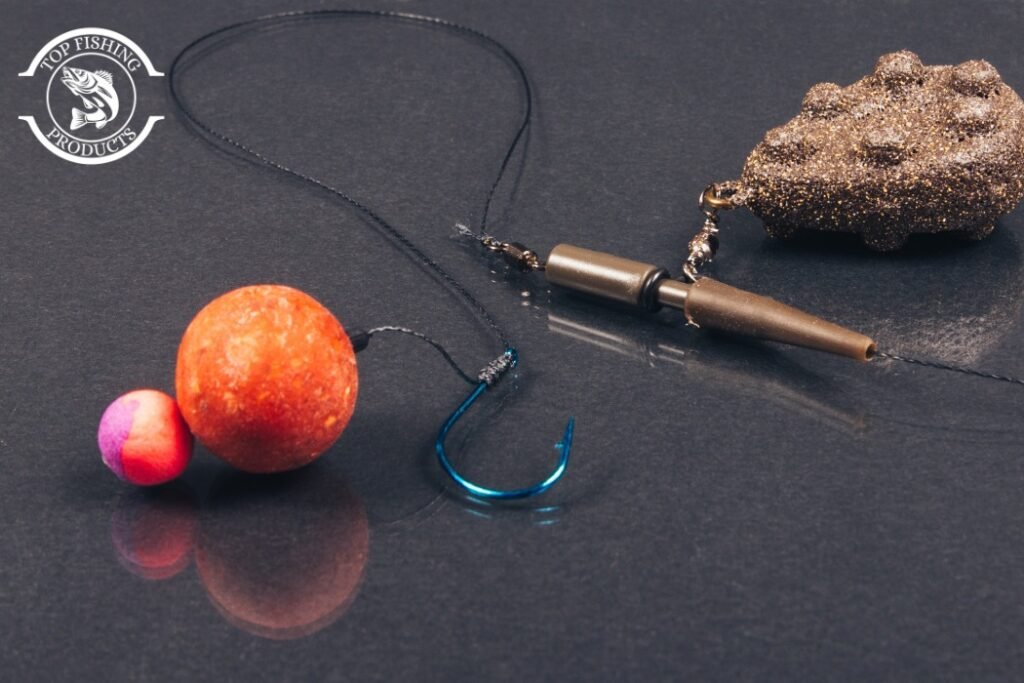
This rig is ideal since these fish travel in groups. Because this setup has two hooks, you can catch two fish at once. The Paternoster rig has only one drawback, that your bait won’t sink into bushes and sand since the hooks aren’t flat on the ground.
How the Paternoster Rig Works
The sinker is tied at the very bottom of the leader. Above the sinker, the line loops in one or two places. The hooks are attached to the line’s loops. Many fish feed on the ocean floor, where the bait hangs just above it.
Step 1: Cut a Leader Line
Start with a piece of monofilament leader line about 2 to 3 feet long. Use 30 to 50-pound test line for strength.
Step 2: Tie the First Dropper Loop
About 12 inches from the top of the leader, tie a dropper loop. The loop should be about 2 to 3 inches long. This is where your first hook will go.
Step 3: Tie the Second Dropper Loop
Move about 3 to 4 inches below the first loop and tie another dropper loop. Make it the same size as the first one.
Step 4: Attach the Hooks
Attach a hook to each dropper loop. You can use circle hooks or J hooks, but circle hooks are better for beginners. Sizes between 1 and 3/0 work well for smaller species.
Step 5: Tie on the Sinker
At the bottom end of the leader, tie on a pyramid sinker. Pyramid sinkers are very good for sandy beaches because their shape helps them dig into the sand and stay in place.
Step 6: Connect to Your Main Line
Tie the top of the leader to a swivel. Then tie your main line to the other end of the swivel.
Now the Paternoster rig is complete. Bait both hooks and cast into the surf. This rig gives you two chances to catch fish at the same time.
3. The Knocker Rig
The Knocker rig is the most basic rig. It is possibly one of the simpler rigs to assemble. When fishing near rocks, reefs, or other structures, they are typically the best options.
The sinker is located directly on the leader line, just above the hook, which is a unique feature of the Knocker rig design. In certain situations, the weight remains near the bait to maintain it near the bottom and reduce catching.
How the Knocker Rig Works
Because the sinker rests just above the hook, the bait stays tight to the ocean floor. This is good when fish are feeding directly on the bottom.
Step 1: Slide on the Sinker
Take your leader line and slide an egg sinker or bullet sinker onto it. Choose a weight between 2 and 5 ounces, depending on the surf.
Step 2: Tie on the Hook
Tie a circle hook to the end of the leader line. The sinker will slide down and rest against the eye of the hook.
Step 3: Attach to Main Line
Tie the other end of the leader to a swivel. Then connect the swivel to your main line.
That is all you need to do. The Knocker rig is very simple and fast to set up.
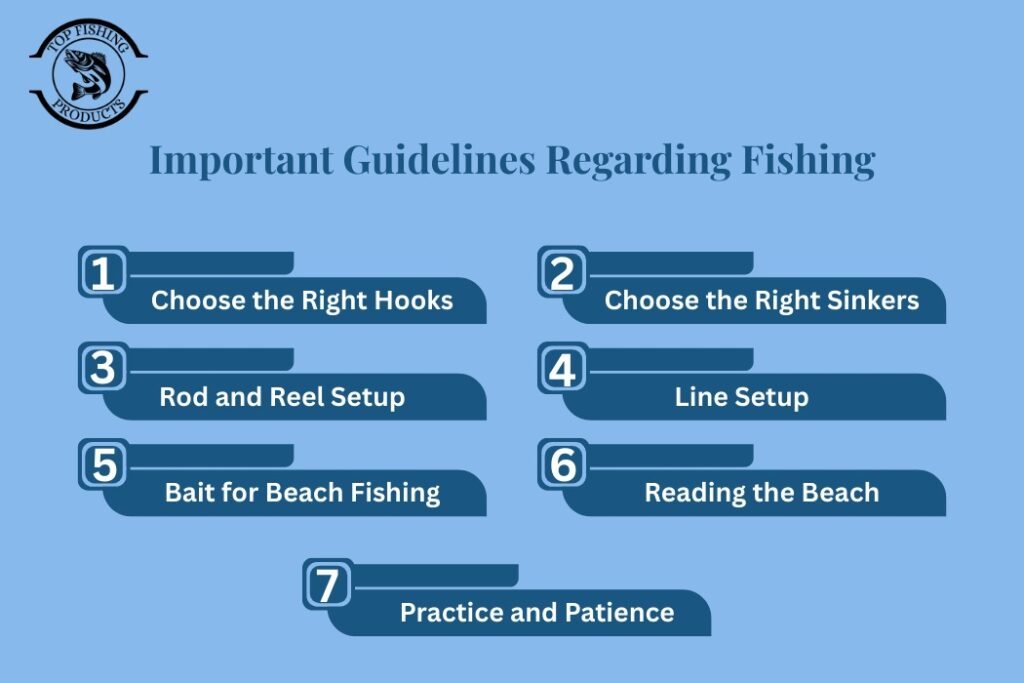
Important Guidelines Regarding Fishing
In the below guide, we’ll get into multiple aspects that every angler should be aware about. Likewise, what bait, reel, hooks, and sinkers are best to use and what is required while fishing. Let’s get into:
1. Choose the Right Hooks
The most important part of beach fishing is the hook. For example, beginners frequently get told to use circle hooks. Because they catch fish at the corner of the mouth, circle hooks are important. While the hook is safely removed, it is comparatively easier to catch a fish, which encourages catch-and-release fishing. Circle hooks also reduce the probability of gut hooking.
It is not necessary to jerk the rod hard in order to catch the fish while using a circle hook. It is better to let the fish draw the line, which is then gradually raised. As a result, the hook will catch itself. The best hook size range for medium-sized fish is between 2/0 and 5/0. The hook used must be small for small fish.
2. Choose the Right Sinkers
Use a sinker to keep your bait in place. Use a pyramid sinker when fishing on sandy beaches during surf. This is due to its ability to attach firmly to the sand, which will stop the water flow from consuming the bait. You might be able to use two or three ounces.
However, if the flow is mild. You might use 4 to 6 ounces if it is particularly heavy. Always use the least amount of weight you can. You can use egg sinkers for a Knocker Rig or a Fish Finder.
3. Rod and Reel Setup
With a decent rod and reel setup, beach fishing becomes easy. The ideal length for a rod is between 10 and 12 feet. Fishing more deeply into the surf is made possible by the longer rods. You should select an action rod that is medium-heavy.
Its strength is sufficient to battle big fish and throw heavy sinkers. A spinning reel with a size between 4000 and 6000 will work perfectly. Ensure that a smooth drag system is included. Fish in saltwater are capable of powerful runs.
4. Line Setup
A braided line is often used as the primary line by fishermen. Braided lines weighing 15 to 20 pounds are strong and thin. With it, you can cast deeper. You must wear a shock leader because the braid is thin.
A stronger monofilament line that is tied between the rig and braid is called a shock leader. A monofilament leader weighing 30 to 50 pounds is effective. It reduces break-offs and reduces the impact of casting with big weights.
5. Bait for Beach Fishing
Common baits used in beach fishing include clams, squid, cut mullet, sand fleas, and shrimp. The best baits are those that are fresh. To catch different kinds of fish, use different baits. While larger fish may need cut baits.
Little fish need minute pieces of shrimp and sand fleas. It is best to throw the baits beyond the breaking waves. This is due to the fact that the majority of fish prefer deeper waters.
6. Reading the Beach
Pay close attention to the water before casting. In the deeper throws and holes between sandbars, fish frequently build up. Where the water is deeper, you might see darker water.
A bottom contour, which is why the position of a sandbar is shown by breaking waves that appear to form frequently in the same spot. An excellent place to cast is behind the breaking waves.
7. Practice and Patience
Fishing on the beach is very patient. The bites can come quickly at times, or you might have to wait. Chumming and experimenting with various baits and distances will be beneficial. You will have the ability to “feel” the bites and understand the wave movement as you practice. Your confidence will grow as you fish more.
Safety Tips
Be aware of the winds and the waves at all times. You should never ignore the ocean. You can be knocked down by strong waves. When necessary, put on polarized sunglasses to protect your eyes and see underwater. After fishing, always rinse your equipment with fresh water to avoid harming it.
Conclusion
Fishing on the beach is simple, fun, and profitable. It is quite simple to catch a variety of fish on the beach if you can master three basic setups, such as the Fish Finder, the Paternoster, and the Knocker rig. The Fish Finder is ideal for both the natural movement of bait and huge fish. For small fish, having two hooks is often helpful.
Particularly when fishing close to structures, the Knocker rig is easy to use. For a better and safer hook set, circle hooks are usually a good choice when fishing. Fishing on sandy beaches requires the use of a pyramid sinker at all times. A beginner can catch the most popular kinds of surf fish with the proper setup. Maintaining a simple, secure, and comfortable setup is important.
FAQs
1. What is the best beach fishing rig for complete beginners?
The best beach fishing rig for complete beginners is the Fish Finder rig. It is simple to set up and very effective. It allows the fish to take the bait without feeling much resistance.
2. How heavy should my sinker be for beach fishing?
The weight of your sinker depends on the surf conditions. In calm water, 2 to 3 ounces may be enough. In moderate surf, 3 to 5 ounces works well.
3. Can I use braided line for beach fishing?
Yes, you can use braided line for beach fishing. A 15 to 20-pound braid is good for casting far distances.
4. What is the best bait for beach fishing?
Shrimp is one of the best and most popular baits for beach fishing. Other good options include sand fleas, squid, clams, and cut mullet.
5. Do I need a long rod for beach fishing?
Yes, a longer rod is helpful for beach fishing. A rod between 10 and 12 feet allows you to cast farther into the surf.