Lake trout are strong fish that prefer cold water. Most fishermen find catching them very exciting. They need a unique approach to fishing since they behave differently from normal shallow-water fish. When searching for food, many kinds of lake trout stay deep and hardly move.
You must be aware of their habits, food intake, and preferred locations in the lake if you want to catch them. The following guide will provide beginners with an easy-to-understand explanation of the stages involved in lake trout fishing. Catching lake trout is much more successful and satisfying when you know where to look, what to use, and how to fish patiently. Let’s explore it:
Things to Know About Lake Trout Fishing
These fish require a special approach to catch. This guide includes the best timing to catch, food options, where to get them, and much more. Let’s understand proper knowledge about the lake trout fish to make access easier. Let’s get into:
1. Knowing What Makes Lake Trout Different
Fish and perch are examples of shallow-water fish that are very different from lake trout. They usually stay deep in the lake and prefer cold water. They can swim slowly but powerfully because of their long, strong bodies. Lake trout are intelligent and careful due to their large size and long life.
Instead of insects, they eat a lot of other fish. Lake trout usually chase fast-moving bait because of this. Fishermen can choose the right depth, bait style, and presentation for better success by being aware of these differences.
2. Where Lake Trout Live in a Lake
Since the water is cold and pure, lake trout typically live in deep levels. To make their lives comfortable during the warm months, they will go far below the surface. Because food may be easier to find near drop-offs, submerged points, and deep slopes, they commonly remain in these areas.
Lake trout may easily move between deep and shallow water in these situations. They also explore the water after colonies of baitfish. Fishermen can stay clear of shallow water and focus their hunt for fish in locations where lake trout are more likely to be found by knowing where they live.
3. How Seasons Change Lake Trout Location
The location of lake trout in the lake is greatly affected by the seasons. Since the water is chilly everywhere in the early spring, lake trout may be found close to the shore and at the water’s surface. The lake trout will be forced far into cold waters by the warm water throughout the summer.
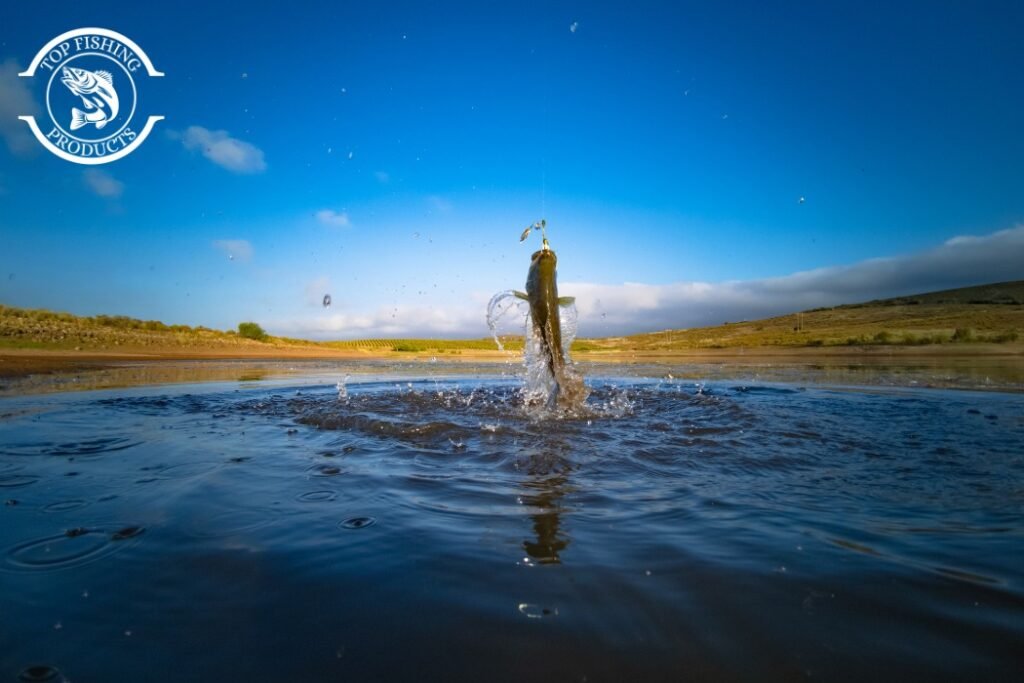
They return to rocky areas in the fall, possibly for spawning, as a result of the cold water. Lake trout will travel between the middle and deeper areas of the water during the winter months when they are active in cold water under the ice.
4. Best Time of Day to Catch Lake Trout
Lake trout are more active when there is less light, and the water appears calm. This is why early morning and late evening are generally regarded as the ideal periods. Bright sun often forces trout to deeper water, particularly in clear lakes. They may well up in the water column and remain active for a longer period of time on cloudy days.
In addition, wind can be useful in reducing surface light, which calms the trout. The majority of lake trout stay deep and inactive on summer evenings. The chance of continuous bites is increased by selecting the ideal time of day.
5. Understanding Lake Trout Food and Feeding
Smaller fish species found in the lake are the main food source for lake trout. They can use anything from whitefish to smelt as bait. Slow but powerful strokes are necessary because lake trout often approach from behind and underneath. Additionally, one must exercise patience because they often pursue bait before attacking it.
In addition, because of their patience, they don’t usually follow moving bait, especially in cold water. It helps when lure sizes and colors match the fish sizes. The nutrition of lake trout can aid fishermen in selecting more effective bait.
How to Catch Lake Trout Fish (Detailed Guide)
There are a few steps to catch trout. Let’s explore what reel, bait, and rod are best:
1. Choose the Right Rod
It’s very important to select the right rod for fishing. Some fish are very strong and heavy, but for these kinds of fishes a, heavy or medium-heavy rods work best. The rod must be strong and have enough strength to control the fish without bending too much. If the material is not right, the rod can break due to heavy fish.
The tip is using slightly flexible rods that can absorb sudden pulls easily. The ideal rods for casting and trolling must be between 6 and 8 feet. A comfortable rod reduces hand strain and even helps to maintain control over the fish.
2. Pick the Right Reel
These fish make long and powerful runs, so always hold the reel tightly. Smooth drag system helps to prevent breaks during the fight. Both spinning reels and baitcasting reels work, but choose the one that is best for your strength.
Some anglers prefer reels that show the line length because it helps to control the depth. A reliable reel increases the success and confidence on the water.
3. Line and Leader Choices
Line choice plays an important role in Lake Trout fishing. Many people use braided line because of its strong and sensitive material. It’s easy to feel bites in the deep water.
Adding a fluorocarbon leader helps to hide the line and improves the chance of bites. It also protects against sharp rocks. Always check the line before using it because it avoids losing fish during a fight.
4. Best Lures for Lake Trout Fishing
It can be beneficial to use lure varieties that look like little fish. In general, shiny spoons are well-liked. When dipped in water, the brightness increases. When trolling, deep-diving crankbaits might work well if the speed is appropriate.
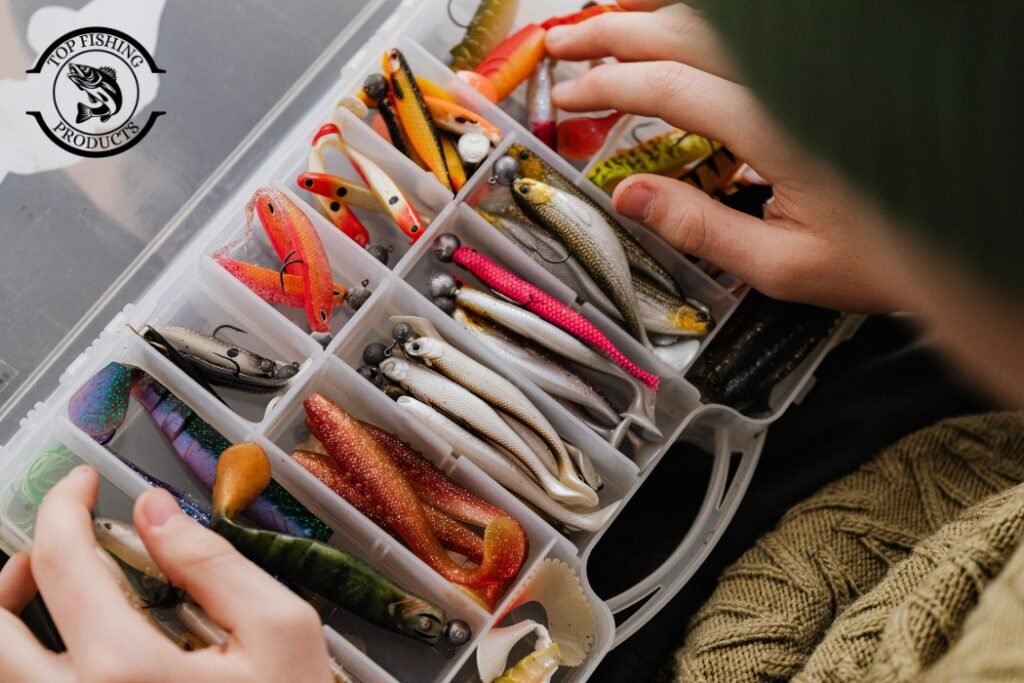
Using soft plastic lures close to the bottom can be successful. In many lakes, tube jigs work well. You can get the trout to follow but not eat by changing the size and color of your lures. It can be useful for copying natural behavior.
5. Use Natural Bait
When lake trout are not actively looking for lures, natural bait works very well because minnows, smelt, and cut fish leave behind strong scent trails that attract trout from a distance. These baits can be suspended at a specific depth or fished close to the bottom.
While some anglers also use worms and leeches, the fish bait is usually effective for large trout. When using live bait, always check the local fishing regulations. More hook-ups and fish are caught when the bait is presented naturally, and the hooks remain sharp.
6. Build Skills and Patience Over Time
Patience and constant learning are important for lake trout fishing. Even when everything appears to be going well and the water conditions are favorable, there will be slow days. There is something new to learn about depth, timing, and bait selection on every trip.
Future fishing results will undoubtedly be improved by describing minor features. It will undoubtedly be easier to avoid mistakes during the fishing battle if you stay composed and careful. As patience and experience make it easier to catch lake trout, learning will always make fishing more fun.
Important Factors About Trout Fishing
Here are some techniques that people ask about for lake trout fishing. The guide below is enough to clarify all the confusion. Let’s get into:
1. Use Sonar and Fish Finders for Lake Trout
Fish finders and sonar are useful instruments that help fishermen find lake trout more quickly. Sonar shows the water’s depths and the features of the bottom. In addition, sonar shows fish activity in the water. It is common to see trout activity close to deep water or schools of baitfish.
Fishing with sonar saves time and makes it easier to avoid fishing in empty waters. Additionally, sonar makes sure your lure is positioned at the proper fishing depth. Sonar is considered one of the most useful instruments for lake trout fishing when used properly.
2. Trolling Basics for Lake Trout
It is well known that trolling is a successful technique for catching lake trout. This is due to the fact that trolling covers a lot of water. Pulling a bait behind the boat while moving it slowly is known as trolling.
When the precise location of the lake trout is not clear, this approach is quite helpful. It is necessary to correctly monitor the boat’s speed. There will be little possibility of catching lake trout if it is either too fast or too slow to catch. It is best to follow the edges when underwater.
3. Getting Lures Deep: Weights and Downriggers
Since lake trout live in deep water, it takes specialized equipment to get to them. To reach a specific depth, weights are attached to the fishing line. The lures are pulled downward using diving tools, which are also available. Because of the ability to control depth, downriggers are also useful for deep-water fishing.
When a fish bites, the lures attached to these diving tools are released. To guarantee that the lures are in the water at a specific depth, specialized equipment is required. The key to fishing for lake trout may lie in controlling depth.
4. Speed and Action While Trolling
Lake trout bites can be affected by the lures’ movements and speed. Sometimes it appears that lake trout prefer slower-moving lures with a weaker action, while sometimes they prefer faster-moving lures. Finding out what lake trout want at a given moment can be achieved by testing lures at different rates.
If it is a natural reaction for them, it can be discovered by seeing lures in action. Lake trout bites can frequently result from sudden twists in a boat that force lures to move deeper or faster. Maintaining this speed can be helped by monitoring when lures bite.
5. Vertical Jigging for Deep Lake Trout
Vertical jigging should be successful if the lake trout are right under the boat. Fishermen must drop a heavy lure into the water at a depth equal to the trout’s depth in order to vertical jig. Lifts are done and then quickly lowered back into the water to generate movement.
In some situations, lifts are more effective than drops, or the opposite is true. Keeping an eye on the line is important because trout can strike while the bait is sinking. This strategy, especially in deep waters and quiet climes, keeps the lure down longer and improves the chances of catching trout.
6. Casting for Lake Trout in Shallow Periods
When lake trout use shallow water in the spring and fall, this technique works quite well. During these times, trout typically swim in reefs, points, and sandy beaches. In such places, trout can be expected with casting. The lure will reach the proper depth if it is allowed to sink into deep water before casting.
Casting slowly and steadily is sure to earn rewards when fishing in chilly water. Compared to other active fishing methods, casting from boats and shorelines is always a more controlled and exciting hunting experience.
7. Ice Fishing for Lake Trout
Another technique for catching lake trout is ice fishing. Fishermen use this technique to drill holes in deep places, on points, and on surfaces. Baitfish tip-ups, soft baits, and jigging spoons are some methods for doing it. When ice fishing, fish finders can be used to track the movements of the fish.
While their depth may change, lake trout are active during the winter. When it comes to ice fishing, safety is important. Fish only in places where the ice is thick enough, and stay away from places where water moves.
8. Playing and Landing a Lake Trout
Calm control is necessary for landing a lake trout. Long runs on the line are possible for a lake trout that has been hooked. In this situation, it’s important to let the drag do its job. The line may break, or the trout may be lost if the hook is pulled too forcefully. It’s important to avoid any slack line and maintain consistent pressure on the fish.
The lake trout needs to be led slowly in the direction of the net as it gets tired. It is always recommended to catch a lake trout head-first. The fish could avoid any harm if the net were sufficiently big. The secret to successfully landing a lake trout is patience.
9. Try Different Lakes and Conditions
Each lake is unique in terms of its depth, water purity, and structure, as well as its food sources. That’s how lake trout act. During the day, trout may stay much deeper in clear lakes. They can travel far shallower in darker water. Feeding habits can be affected by wind, weather, and fishing pressure.
The angler gets experience and expertise by trying out new lakes. To achieve greater success, techniques must be modified properly. The most important part of effective lake trout fishing is learning to adjust.
10. Handling and Releasing Lake Trout Safely
The health risks to lake trout are also reduced when they are handled carefully. For example, you can avoid damaging the lake trout’s skin by moistening your hands before handling it. Care must be taken to avoid crushing or disturbing the lake trout.
With pliers, the hook can be quickly removed. Cutting the line is preferable to pressing the hook if it is deeply set. Keeping the lake trout vertically supported in the water, this aids in its survival. The lake trout can be safely released once it swims away with strength.
How to Read a Lake Map for Trout Spots?
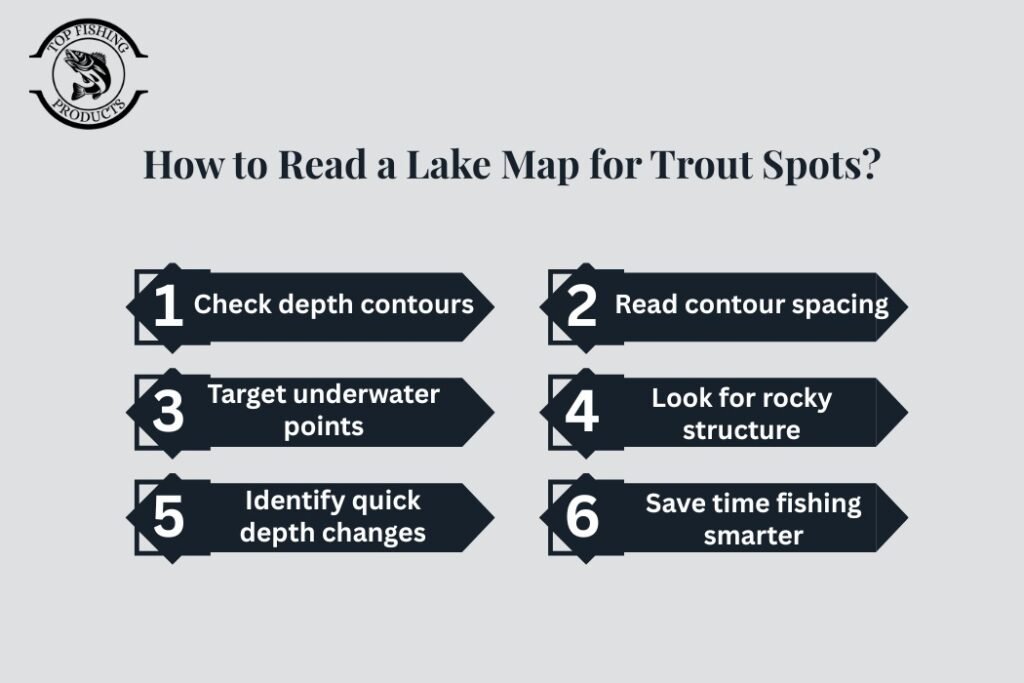
A lake map helps the anglers to understand the depth and structure of deep water. Deep basins and underwater points are very important to understand. On the map, the anglers’ control lines show how quickly the depth changes.
The lines that are closed together show that there are sharp drops that attract trout. Trout fishes mostly found in deep water and in rocky areas. Studying the map is important because it saves time and even helps the anglers to focus on the most promising spots.
Common Mistakes When Fishing for Lake Trout
- One common mistake is finding the fishing on the water. Always look for trout in deep water because trout fish stay in deep side in summers.
- Another mistake that people make is that they use the wrong trolling speed, which ruins the lure’s action.
- Avoid staying in one spot for a long time, just try another area to search for fish.
- Don’t ignore sonar and lake maps, which totally waste your time, and you catch nothing.
- Don’t rush because, without patience, you can lose the fish near the boat.
Always learn from these mistakes, as they will help you to improve your skills and make you a professional. Making small changes and staying conscious makes you better.
Final Thoughts
Lake trout fishing becomes easier when you understand the behaviour of lake trout. To make your skills better, have specific knowledge about trout fishing, like where they live, what they eat, and how seasons affect them. Using the right gear, rod, and reel can easily improve your success.
Patience and learning are important because every lake is different. So being flexible is the key. Don’t take stress and enjoy the process with patience and attention. If you practice daily, your skill will become better, and you feel confident.
FAQs
1. What’s the best depth to catch Lake trout?
Lake trout are usually found in deep, cold water. During the summer, they stay very deep. While in spring and fall, they move closer to the surface.
2. What baits work best for trout?
Spoons, crankbaits, and soft plastic lures are the best. Don’t use random baits; always see the fish category.
3. What’s the best season to catch trout?
Spring and fall are usually the best. There is less effort required because trout fish commonly move to the top of the surface and are easier to catch.
4. Do lake trout fight hard when hooked?
Yes, it’s difficult to deal with strong fish. These fish make long runs and can be caught with proper techniques.
5. Can beginners catch lake trout easily?
Yes, beginners can catch lake trout by focusing on the right depth, using simple gear, and fishing patiently with slow movements.