If you have ever reeled in a tangled, twisted mess of line after a long day on the water, you already know why fishing swivels matter. A small piece of metal, no bigger than a fingernail, can be the difference between a smooth retrieve and a bird’s nest of line wrapped around itself. Fishing swivels are one of those tools that get overlooked until something goes wrong, and then anglers suddenly want to know everything about them.
This guide walks through what swivels actually do, the different types you will run into at the tackle shop, how to pick the right size, and how to tie them onto your line so they hold up under pressure. Whether you are rigging up for catfish, bass, or offshore trolling, understanding swivels will save you time, line, and frustration.
What Do Swivels Do in Fishing?
At the most basic level, a fishing swivel connects two sections of line or connects your main line to a leader while allowing each side to rotate independently. This rotation is the whole point. Many baits and lures spin as they move through the water, especially spoons, spinners, and live bait rigs that drift or get reeled slowly. Without a swivel, that spin transfers directly up the line, and after a few casts, your line looks like a coiled phone cord.
Swivels also add a small amount of connection strength and flexibility to a rig. Some styles include a snap at one end, which lets you change lures quickly without retying knots. Others are built purely for rotation and are tied directly into the line on both ends.
In short, a swivel does three jobs: it stops line twist, it makes rigging faster in some designs, and it gives you a strong connection point between different parts of your setup. Anglers targeting species that fight hard, like catfish or saltwater game fish, often rely on swivels to keep the connection solid when a fish makes a run.
Common Types of Fishing Swivels
Not all swivels are built the same way, and the differences matter more than most beginners expect. Here are the main types you will find.
Barrel Swivels
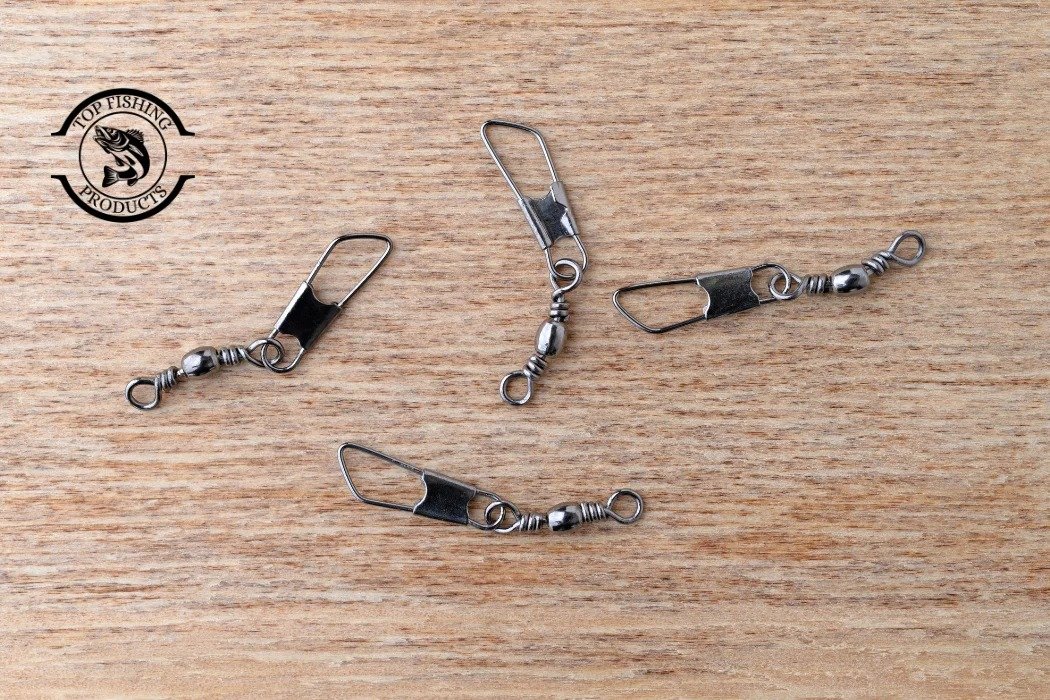
Barrel swivels are the most basic and widely used type. They get their name from the small barrel-shaped housing in the middle that connects two rings. These are inexpensive, easy to find, and work well for light-to-moderate fishing situations, such as panfish, trout, or general freshwater rigs.
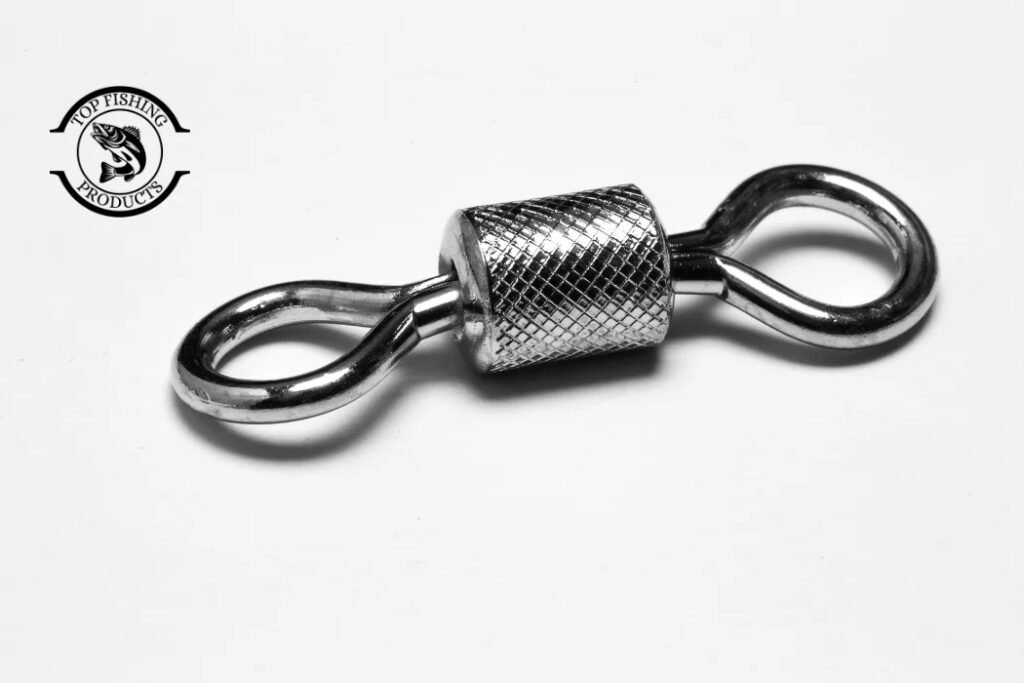
However, barrel swivels do have a weakness. Under constant pressure or with heavier lures that spin fast, the internal mechanism can bind up and stop rotating properly. This is fine for casual fishing, but it becomes a problem when you are trolling for hours or fighting larger fish.
Ball Bearing Swivels
Ball bearing swivels solve the binding problem found in barrel swivels. Instead of a simple pin mechanism, they use actual ball bearings inside the housing, similar to what you would find in a wheel or a fishing reel. This design allows for smooth, continuous rotation even under heavy load.
As a result, ball bearing swivels are the preferred choice for trolling, offshore fishing, and any situation involving fast-spinning lures or strong, sustained pulling force. They cost more than standard barrel swivels, but for serious anglers, the reliability is worth the extra money. A ball bearing swivel that fails mid-fight can cost you a trophy fish, so many guides consider this an area not worth cutting corners on.
Rolling Swivels
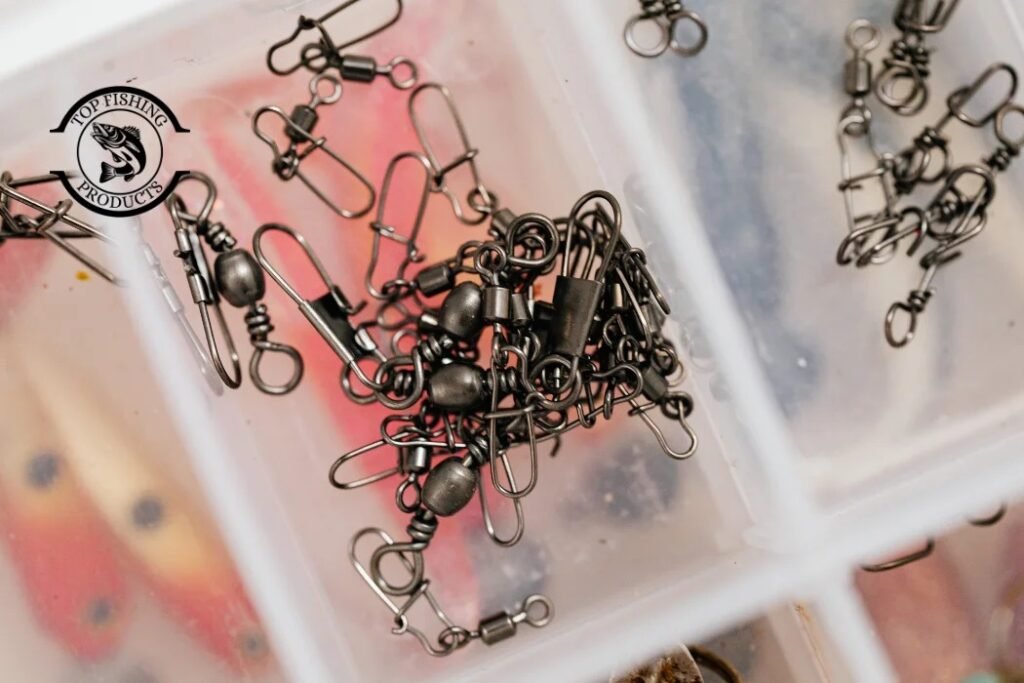
Rolling swivels are technically a subtype of barrel swivels, though the terms are sometimes used interchangeably depending on the manufacturer. Generally, a rolling swivel refers to a compact, smooth-turning barrel design often used with wire leaders or in saltwater rigs where a slim, low-profile connection is needed. They are a solid middle ground between basic barrel swivels and the more expensive ball bearing versions.
Crane Swivels
Crane swivels look similar to barrel swivels but are typically built with a slightly different internal shape, often favored in saltwater and offshore setups. They tend to be strong for their size and are commonly paired with wire leaders when targeting toothy fish like mackerel or bluefish. Crane swivels are a good option when you need dependable strength without the bulk of a ball bearing swivel.
Three-Way Swivels
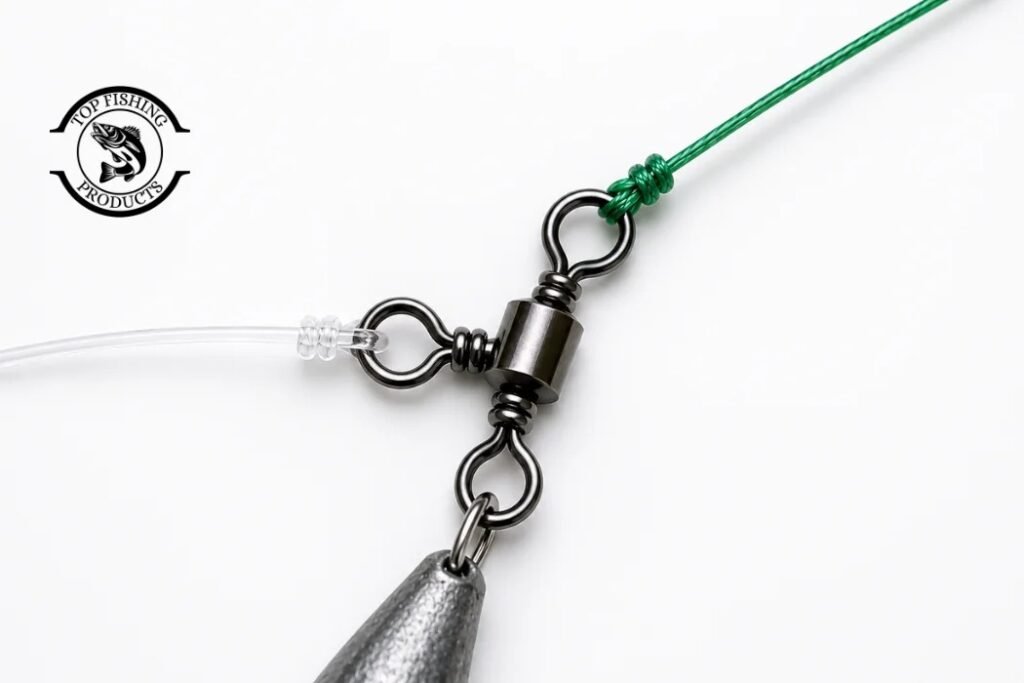
A 3-way swivel, sometimes called a T-swivel, has three rings instead of two, arranged so that each ring can move independently. This design is useful for rigs where you need to attach a weight, a hook, and your main line at a single junction. Three-way rigs are extremely popular for bottom fishing, drift fishing for walleye, and certain catfish setups where keeping the weight separate from the hook line reduces tangles and lets bait move naturally.
How to Choose the Right Fishing Swivel
Picking a swivel is not just about grabbing whatever is in the tackle box. A few factors should guide the decision.
Target species and line strength. Heavier fish need swivels rated for higher breaking strength. A swivel is only as strong as its weakest point, so matching it to your line and leader strength prevents it from becoming the failure point in your rig.
Fishing method. Trolling and fast-retrieve techniques call for ball bearing swivels because of the constant rotational stress. Meanwhile, still fishing or bottom rigs with minimal movement can often get by with a standard barrel swivel.
Water clarity. In clear water, some anglers prefer smaller, less visible swivels or black-finished swivels so the connection point does not spook wary fish. In stained or murky water, this matters less.
Corrosion resistance. Saltwater demands swivels rated for saltwater use, usually stainless steel or black nickel finishes. A freshwater swivel left in saltwater will corrode quickly and weaken.
Fishing Swivel Sizes Explained
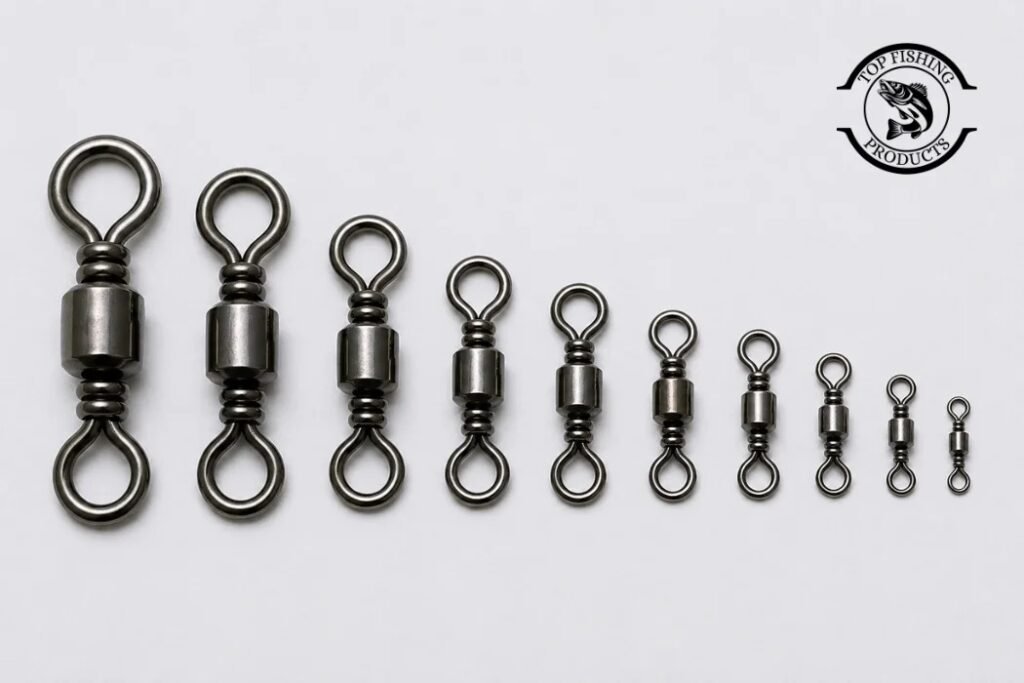
Fishing swivels are sized using a numbering system, and this trips up a lot of beginners because the numbers run backward compared to what feels intuitive. Smaller numbers, such as size 1 or 2, indicate larger and stronger swivels. Larger numbers, such as size 10 or 12, indicate smaller and lighter swivels meant for finesse fishing.
Manufacturers also list a pound-test rating alongside the size number, and this rating tells you the approximate breaking strength of the swivel itself. As a rough guide:
- Sizes 10-14: light finesse fishing, panfish, trout, small bait rigs
- Sizes 5-9: general freshwater use, bass, walleye, catfish on lighter tackle
- Sizes 1-4: heavier freshwater and light saltwater, larger catfish, stripers
- Sizes 4/0 and up: big game saltwater, offshore trolling, sharks
It helps to match the swivel’s rated strength to your main line and leader rather than just picking based on size number alone. A mismatch, where the swivel is much weaker than the line around it, defeats the purpose of a strong rig.
How to Use Fishing Swivels the Right Way
Knowing the types and sizes only helps if the swivel is tied on correctly. Here is a simple approach that works for most rigs.
- Choose the right knot. An improved clinch knot or a Palomar knot both work well for attaching a line to a swivel eye. The Palomar knot is often preferred because it retains more line strength and is harder to tie incorrectly.
- Leave a little slack in the eye. Do not cinch the knot down so tight that the line binds against the metal ring. The line needs to move freely inside the eye for the swivel to rotate properly.
- Check the swivel before use. Spin it between your fingers before tying it on. If it feels gritty, stiff, or does not turn freely, discard it. A swivel that does not rotate is just added weight and a weak point.
- Position it correctly on the rig. For most setups, the swivel goes between the main line and the leader, roughly 18 to 36 inches above the hook or lure, depending on the technique. On a 3-way rig, the weight typically hangs from the shortest arm while the hook line extends longer.
- Match hardware to conditions. Add a snap swivel if quick lure changes matter, such as when trolling for different species throughout the day. Skip the snap and tie directly for finesse presentations where minimizing hardware helps.
For example, an angler trolling spoons for lake trout will want a ball bearing swivel with a snap for fast lure changes. On the other hand, someone fishing a slip bobber rig for crappie in clear water may prefer a small barrel swivel tied directly, since fewer moving pieces means less to spook the fish.
Common Mistakes Anglers Make With Swivels
Even experienced anglers slip up sometimes. A few recurring mistakes are worth avoiding.
Using a swivel that is too small for the line strength is one of the most common errors. It creates a weak link that snaps under pressure, often right when a big fish is hooked. Similarly, using an old, corroded swivel because it is already in the tackle box can lead to failure, especially after saltwater exposure.
Another mistake is over-tightening the knot around the swivel eye, which restricts rotation and defeats the purpose of using one in the first place. Finally, some anglers place the swivel too close to the bait, which can spook fish in clear water or interfere with a lure’s natural action.
Final Thoughts
Fishing swivels are small, inexpensive, and easy to overlook, yet they play a real role in how well a rig performs on the water. Choosing the right type, whether it is a basic barrel swivel, a smooth-turning ball bearing swivel, a crane swivel for saltwater toothy species. 3-way swivel for bottom rigs, comes down to matching the tool to the technique and the target fish. Get the right size and strength to tie it properly. A good fishing swivel will quietly do its job all day without you ever having to think about it twice.
Frequently Asked Questions
Do I need a swivel for every rig?
No. Simple rigs using soft plastics or jigs that do not spin often do not need one. Swivels matter most when the lure or bait naturally twists the line.
Can a swivel weaken my line?
The swivel itself does not weaken the line, but a poorly tied knot or a low-quality swivel can create a weak point in the overall rig.
Are black swivels better than silver ones?
Not in terms of strength. Black finishes are mainly used to reduce visibility in clear water, which can help with wary or pressured fish.
How often should I replace swivels?
Check them regularly, especially after saltwater use. If a swivel shows rust, does not spin smoothly, or the ring looks bent, replace it before your next trip.