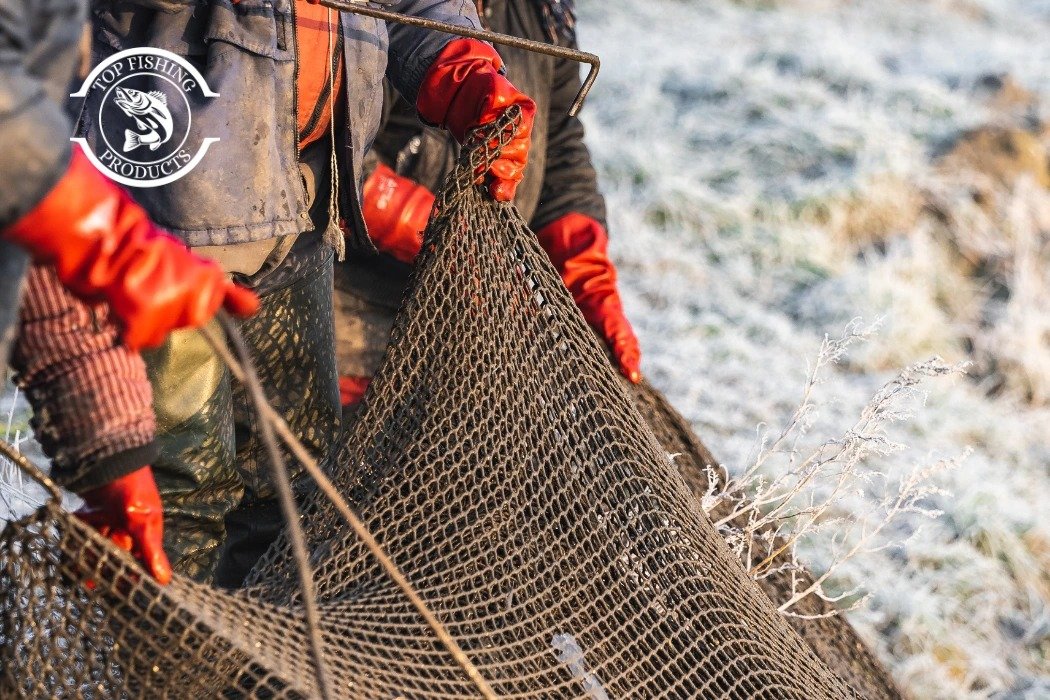
Fishing nets have been used for thousands of years by people who depend on water for food and survival. Making a fishing net is a useful skill that connects modern people to the fishing culture. Making your own fishing net allows you greater control over the net’s strength and size than purchasing one from a store.
Because they can easily adjust the mesh size according to the type of fish they wish to catch, some people prefer to use a handmade fishing net. While purchasing a fishing net from a store is more practical, having a handmade net makes one feel proud of themselves. Let’s explore it:
Understanding the Purpose of a Fishing Net
It is important to fully understand the necessity of a fishing net and the reasons for its specific construction before learning how one is built. It should be mentioned that a fishing net is designed to catch several fish at once. Because of this, a fishing net is an extremely helpful tool for both small-scale and large-scale fishing operations.
A good fishing net should be strong, flexible, and sufficiently wide to hold the caught fish without breaking. Since the mesh of a factory-made fishing net can only be a specific size, a handcrafted fishing net can be very helpful in guaranteeing a good net. One can use the best fishing net for catching fish in rivers, lakes, or the ocean by knowing why a fishing net is necessary.
Making a Fishing Net (Step-by-Step Guide)
Using a fishing net is the most common method of catching fish. When creating a fishing net, people use several kinds of methods. We’ll go over how to create a fishing net in the guide that follows, along with the necessary information that every Angular developer should be aware of. Let’s delve into more details:
Part 01: Materials Needed to Make a Fishing Net
When making a fishing net, choosing the right materials is very important. Let’s have a look at the details:
Cotton and plant fibers are typically used to make traditional fishing nets. Today’s fishing nets are made of nylon or synthetic thread, which is different from traditional fishing nets. This is because they are more durable and stronger in water.
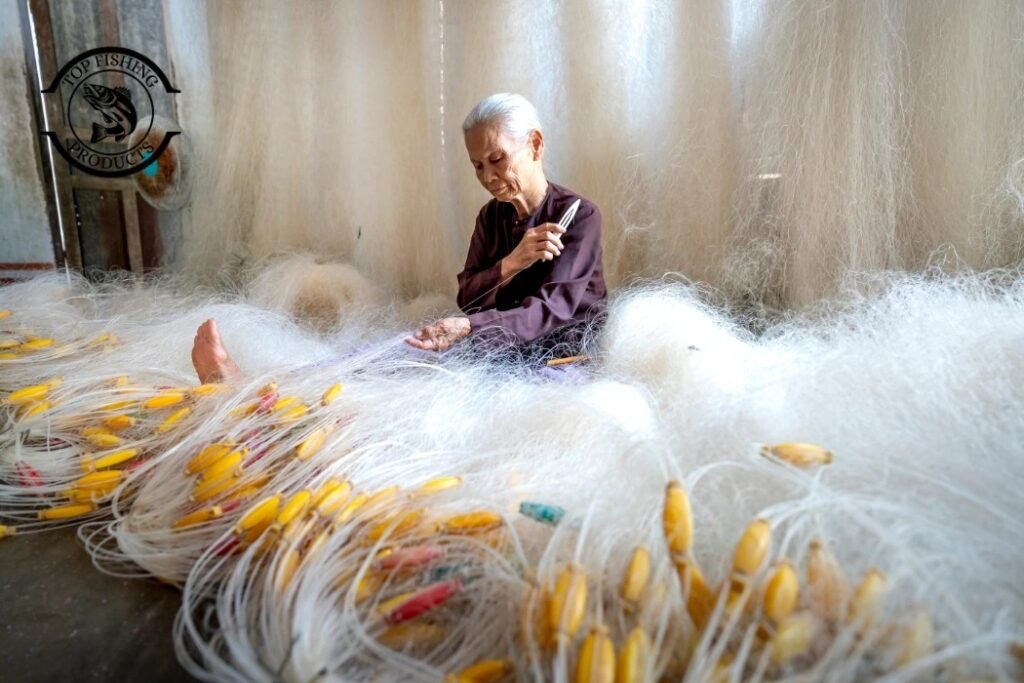
Nylon thread is commonly preferred since it does not rot easily and can handle heavy fish.
A netting needle and a mesh gauge are also necessary for a homemade fishing net to properly distribute the knots.
Note: Purchasing the supplies could take a bit longer than purchasing a pre-made net. It does, however, provide you with the benefit of having a net that satisfies your fishing needs. The net will undoubtedly be impacted by the quality of the materials.
Part 02: Things You Need to Consider Before Making Net
While completing the right tools or materials, have a look at some basic details. It’s very important to check first to avoid interruptions or further issues. Let’s check together:
Choose the Right Thread
One of the most important parts in making a fishing net is the thread. The fishing net’s lifespan is mostly dependent on the thread’s flexibility and strength. It has been noted that, compared to regular thread, nylon thread may handle more weight and offer stronger support when it is thicker. However, it might become challenging to handle if the thread is really thick.
As a result, a balance between flexibility and durability is necessary. Cotton thread is still used by some anglers because it is softer and easier to tie. In addition, compared to cotton, nylon thread is stronger to water damage and lasts longer. Depending on where you want to go fishing and what kind of fish you want to catch, it is important to select the right thread.
Understand Mesh Size in Fishing Nets
The distance between the fishing net’s knots is referred to as the mesh size. This is an important factor that contributes greatly to the net’s effectiveness. In comparison to the effectiveness of a small mesh net, a larger mesh net allows small fish to escape. But bigger fish are caught by the net. When you need to catch certain fish species without catching the smallest ones, this is helpful.
When the goal is to catch a large number of smaller fish, a small mesh net is useful. A mesh gauge makes it simple to control the mesh size when making a fishing net by hand. A handcrafted net has advantages over factory-made nets, which are available in standard sizes. The mesh’s size helps the net’s efficiency.
Prepare the Netting Needle and Gauge
The tools that will be needed across the entire process must be ready before the fishing net is actually woven. The thread will be held in place by the netting needle while it is guided through the loops, and knots are tied. The netting needle is larger and can hold more thread than the standard sewing needle used to make everyday clothes and similar items.
Another item that will be very helpful during the procedure is the mesh gauge. This will be used to maintain the same distance between the knots. The fishing net made without the mesh gauge will be of low quality.
Learn the Basic Net Knot Technique
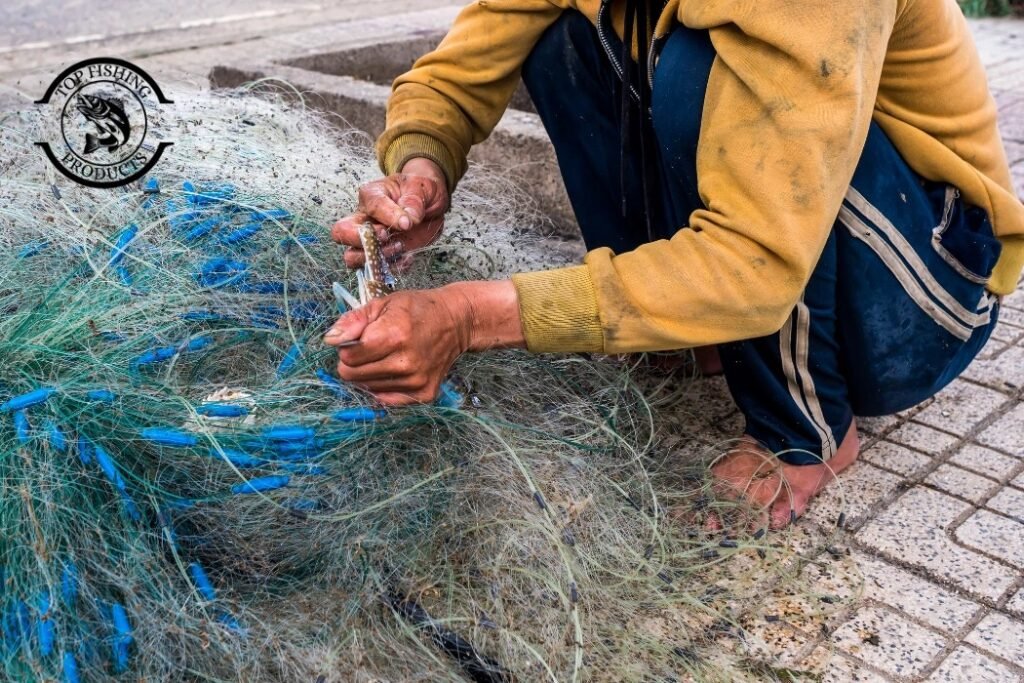
The main structure of a fishing net is the kind of knot that is used. Every square of a fishing net is made up of repeatedly tying the same kind of knot. The fishing net is different from other basic home knots in that it maintains its stability and tightness, particularly when a big catch pulls the net. This kind of knot can be challenging to learn at first, but it gets easier with practice.
The first few rows could be a little challenging for some people, but it gets much easier after that. A handcrafted net may seem slightly different from a machine-made net, but it works incredibly well. This is the main method for building a strong fishing net.
Part 03: Fishing Net Setting
It is the most important part of the process. People use their own strategies, but we are going to use the best strategy. The strategy and net-making process are professional and experienced. Let’s get into:
Step 01: Start the First Row of the Net
The fishing net’s first row acts as the net’s foundation. Because each knot created at this point specifies the orientation of the entire net, this process requires a great deal of patience. Because it is a foundation, the procedure can take longer than in other rows. After that, the thread is wrapped around the mesh gauge and dragged through loops to guarantee equal spacing.
If the first row is not equally spaced, it could have an impact on the entire net. When compared to a factory-made net that is uniformly shaped by machines, the handmade net might be different in a few ways. To guarantee a balanced net, however, a lot of care is taken at this stage.
Step 02: Expand the Net Through Repeated Rows
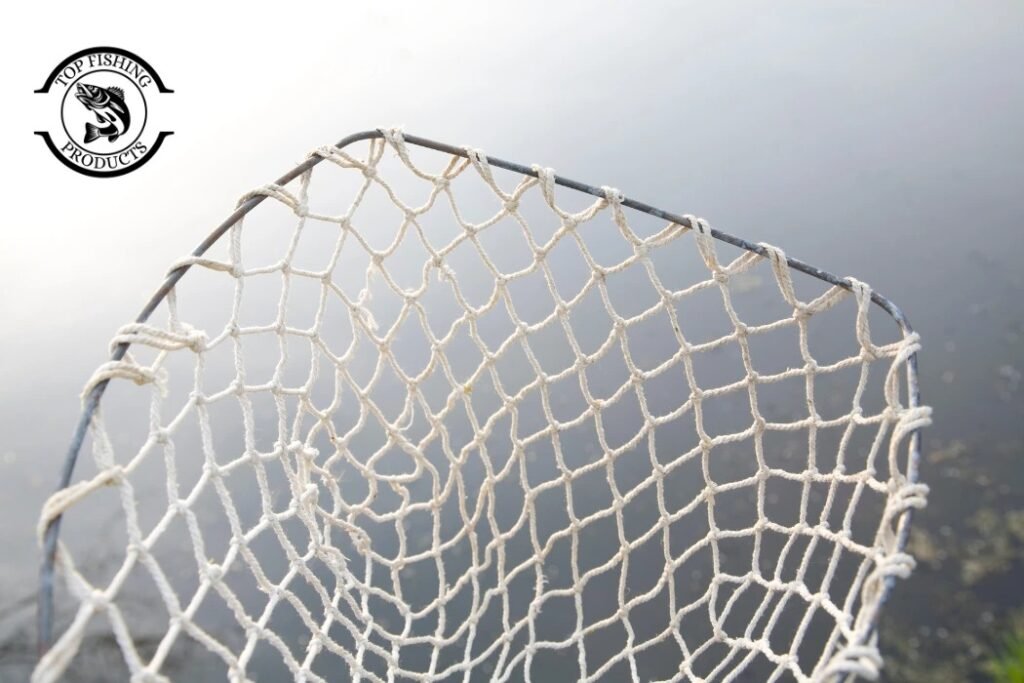
The net keeps expanding row after row after the first row is finished. This is because the knotting design connects each row to the one before it. Because the pattern is well-known, working on the second and following rows is also simpler than the first. The squares in the mesh become visible as the net continues to expand and take shape.
Depending on how they have developed their net-making skills, some fishermen like to work slowly while others prefer to work quickly. Making the net takes more time than purchasing one, but the size and shape may be customized. Here is when dedication and effort finally transform the thread into something beneficial.
Step 03: Adjust the Size and Shape of the Net
Making a fishing net by hand has the benefit of making it simpler to change the net’s size and shape. The majority of nets on the market are of a particular size, and occasionally they may not be appropriate for the fishing region. It is simpler to make a fishing net by hand because it can be made deeper, wider, or longer based on the fishing technique.
While some may require a smaller net for fishing in rivers and ponds, others may require a wider net for fishing in open waters. During the net’s weaving process, rows can be added or removed to change the size.
Step 04: Strengthening the Edges of the Net
When using a fishing net, the edges endure a lot of pressure. Fish struggle inside the net, and water currents put significant stress on its outer edges. Therefore, fishermen must strengthen the edges. They often add extra knots or use thicker rope along the boundaries. Some fishermen draw a firm border around the net. Strengthening the edges prevents tearing and prolongs the net’s lifespan. Although this step takes extra time during construction, it makes the net stronger and easier to handle while fishing.
Step 05: Add Floats and Sinkers to the Net
FFor a fishing net to work effectively in the water, it needs sinkers and floats. Sinkers keep the bottom part of the net underwater, while floats keep the top part above the surface. This balance spreads the net evenly in the water and helps catch fish more effectively.
Manufacturers usually make sinkers from metals or stones, while they make floats from lightweight materials. After finishing the weaving process, fishermen attach the floats and sinkers along the edges of the net. A fishing net with floats and sinkers works more efficiently and is easier to use than a standard net.
Step 06: Test the Fishing Net for Strength
Testing is an important step before using the fishing net once it is finished. To check for loose yarns or weak knots, the fishing net should be slightly stretched. Testing is helpful to avoid any harm when fishing, as compared to skipping this step. A strong fishing net needs to be able to maintain its shape without being split apart.
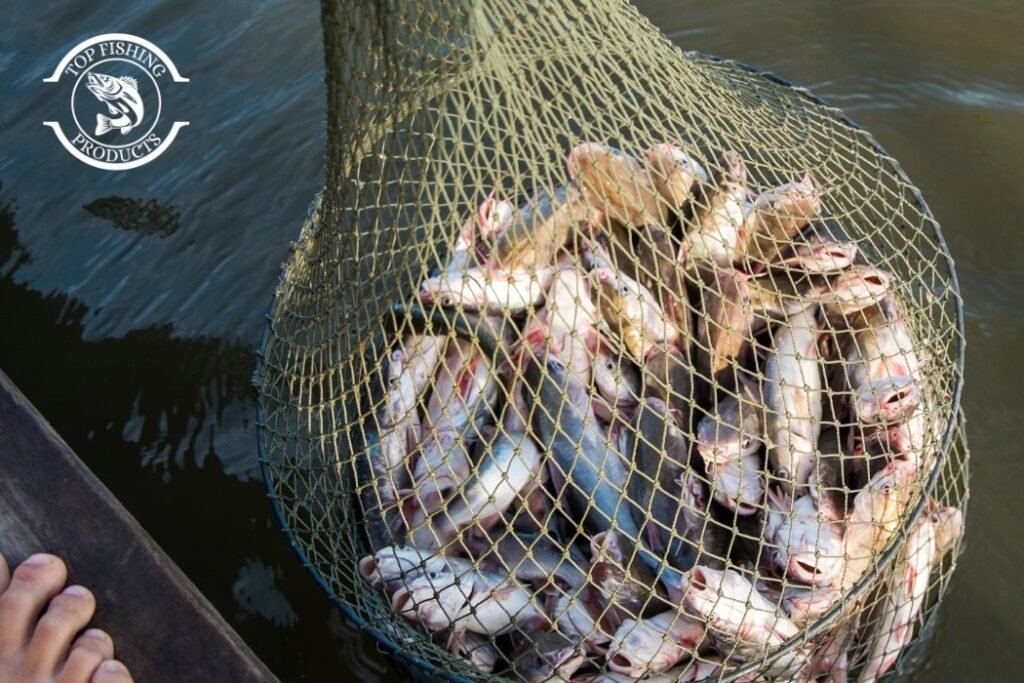
To see how their fishing net performs in such situations, some fishermen test it by placing some weight within. Handwoven fishing nets are tested by the maker, as compared to factory nets, which are tested in a factory setting. To make sure that the effort spent weaving the fishing net is not in useless, this step is important.
Maintenance and Care Tips
Proper maintenance helps a fishing net last longer. Let’s go through:
After each use, the net should be washed with clean water and dried in a shaded area.
Compared with leaving the net wet or dirty, cleaning prevents damage caused by salt, mud, or bacteria.
Storing the net in a dry place also protects it from mold and weakening fibers.
Handmade nets often require more attention than factory nets because they depend on individual knots for strength.
Compared with replacing a damaged net frequently, regular care saves money and keeps the net in good condition.
Good maintenance also ensures that the net remains safe and effective for future fishing trips.
Last Verdict
Making a fishing net is a useful and common skill. When you make a fishing net by hand, you control its size, strength, and design instead of relying on a store-bought option. However, the process requires patience and careful attention to detail. You must focus on every step, from choosing the right thread to selecting the correct mesh size.
Handmade fishing nets also give you more flexibility and help you understand fishing gear better. While modern factory-made nets save time and offer convenience, making your own net allows you to build a tool that fits your exact needs. With patience and proper care, you can create a strong and reliable fishing net.
Frequently Asked Questions:
What material is best for making a fishing net?
Nylon thread is usually the best choice because it is strong, flexible, and resistant to water damage. Compared with natural fibers like cotton, nylon lasts longer and can handle heavier fish.
How long does it take to make a fishing net by hand?
The time depends on the size of the net and your experience. A small net may take several hours, while larger nets can take a few days of careful weaving.
What is the purpose of mesh size in a fishing net?
Mesh size controls which fish are caught. Smaller mesh catches smaller fish, while larger mesh allows small fish to escape and catches bigger ones.
Do handmade fishing nets last as long as factory nets?
If strong thread and proper knots are used, handmade fishing nets can be very durable. Regular cleaning and drying also help them last longer.
Can beginners learn to make a fishing net easily?
Yes, beginners can learn the process with practice. The basic knot technique may seem difficult at first, but it becomes easier after repeating it many times.