Catching catfish consistently comes down to one thing more than any other: how your bait is presented on the bottom. You can have the freshest cut shad in the cooler, but if your catfish rigs setup is wrong for the water you’re fishing, that bait might as well be sitting on your kitchen counter. Catfish feed mostly by scent and by feel, moving along the bottom in a slow, deliberate way, and your rig needs to match how they hunt.
This guide walks through the rigs that actually work, why each one exists, and how to build them without guessing. Whether you’re fishing a farm pond, a river with heavy current, or a big reservoir, there’s a setup here that fits.
Why the Right Rig Matters for Catfish
Catfish are bottom feeders most of the time, and they’re patient. Unlike a bass that might chase a fast-moving lure, a catfish often approaches bait slowly, mouths it, and moves on if something feels wrong. This is why resistance matters so much. A rig that lets the fish pick up bait without immediately feeling the weight of a sinker will result in more solid hookups and fewer dropped fish.
Also, catfish behavior changes with current, water clarity, and depth. A rig built for a slow pond won’t hold bottom in a fast river. Similarly, a heavy three-way rig meant for deep river channels is overkill for a shallow lake edge at night. Matching the rig to the water is just as important as picking the right bait.
Catfish Rig Components: The Building Blocks
Before getting into specific setups, it helps to understand the pieces you’ll be working with. Every catfish rig, no matter how it’s built, uses some combination of the following:
- Main line – Usually 20 to 50 lb monofilament or braided line, depending on the size of catfish and cover in the area.
- Leader line – A separate, often lighter or abrasion-resistant line connecting the hook to the rig.
- Hooks – Circle hooks are the standard choice for most catfish rigs because they hook fish in the corner of the mouth, which reduces gut-hooking and makes catch-and-release safer.
- Sinkers – Egg sinkers, no-roll sinkers, or bank sinkers, chosen based on current strength and how much weight is needed to hold bottom.
- Swivels – Barrel swivels or three-way swivels connect sections of line and prevent twisting.
- Beads – Small plastic beads are often added between the sinker and swivel to protect the knot from abrasion.
Once you understand these pieces, building any catfish rig becomes a matter of arranging them in the right order for the situation.
Slip Sinker Rig for Catfish (The Go-To Setup)
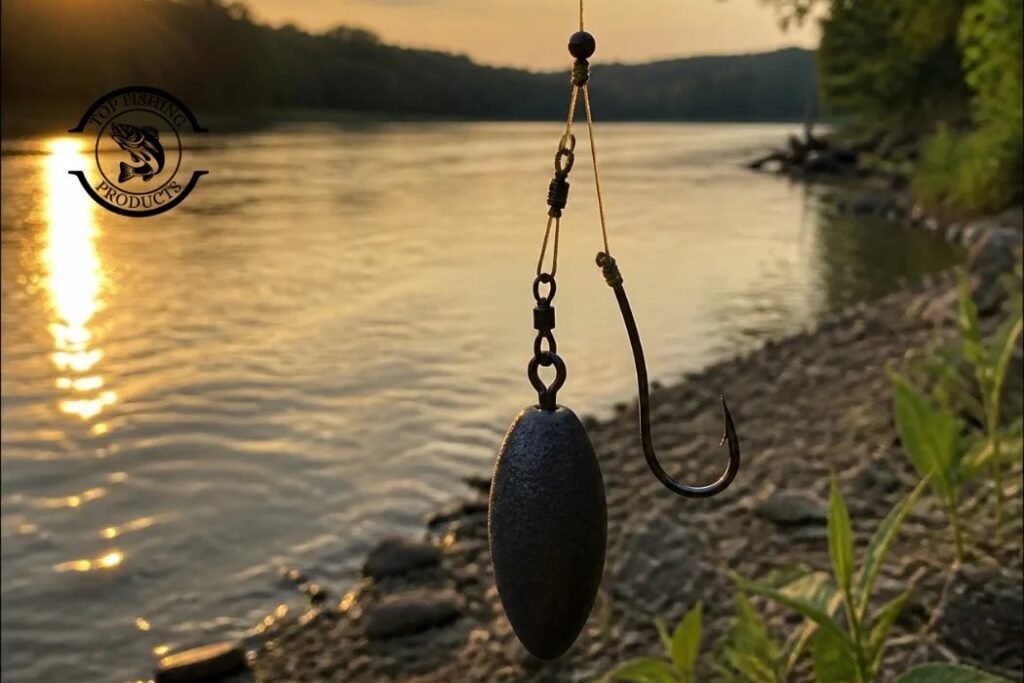
If you only learn one rig, make it this one. The slip sinker rig, sometimes just called a Carolina-style bottom rig, is the most widely used catfish rig setup for a reason: it works almost everywhere, and it lets a catfish pick up bait and move without feeling much resistance.
How to build it:
- Thread your main line through an egg sinker or a no-roll sinker.
- Add a plastic bead below the sinker to protect your knot.
- Tie the main line to one end of a barrel swivel.
- Attach a leader, typically 12 to 24 inches long, to the other end of the swivel.
- Tie a circle hook to the end of the leader.
The sinker slides freely on the main line, so when a catfish takes the bait and starts to move, the line slips through the sinker instead of dragging the weight along with it. As a result, the fish feels almost no resistance until the hook sets.
This setup is ideal for calm to moderately flowing water, and it works well from the bank or a boat. For heavier current, a no-roll sinker holds bottom better than a round egg sinker because its flat shape resists rolling with the flow.
Carolina Rig for Catfish: How It Differs
Anglers sometimes use “slip sinker rig” and “Carolina rig for catfish” interchangeably, and honestly, the core idea is the same: a free-sliding weight above a swivel and leader. However, there are small variations worth knowing.
A traditional Carolina rig, borrowed from bass fishing, tends to use a slightly longer leader, sometimes up to 36 inches, and a lighter bullet-style or egg sinker. This longer leader lets bait move more naturally in the water column, which can help when catfish are suspended slightly off bottom rather than sitting directly on it.
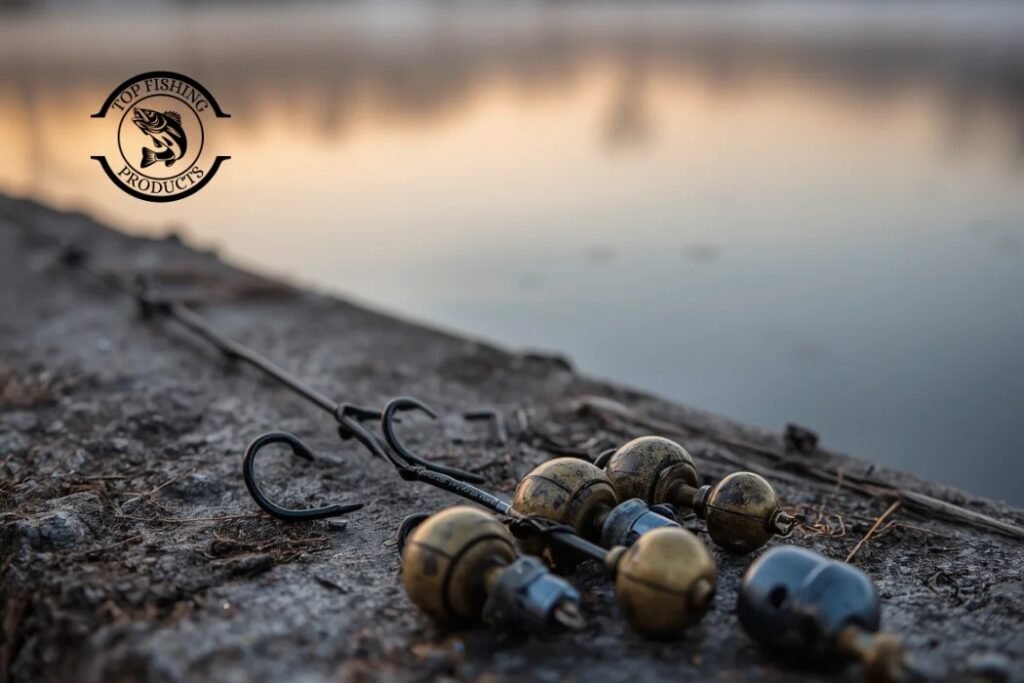
For catfish specifically, shortening the leader to around 18 inches is usually more practical, especially when fishing near structure where a longer leader could tangle. Either way, the mechanics are the same: minimal resistance, natural bait movement, and a hook that’s free to do its job when a fish strikes.
Three-Way Rig for Catfish (Best for Current and Structure)
When you’re fishing a river with real current, or targeting catfish holding tight to structure like rock piles and drop-offs, the three-way rig for catfish earns its keep. This rig keeps your bait pinned closer to the bottom and reduces the chances of it drifting away from where the fish are holding.
How to build it:
- Tie your main line to one eye of a three-way swivel.
- Attach a short dropper line, around 6 to 12 inches, to a second eye. Tie a sinker to the end of this dropper.
- Attach a longer leader, 18 to 24 inches, to the third eye, and tie on your hook.
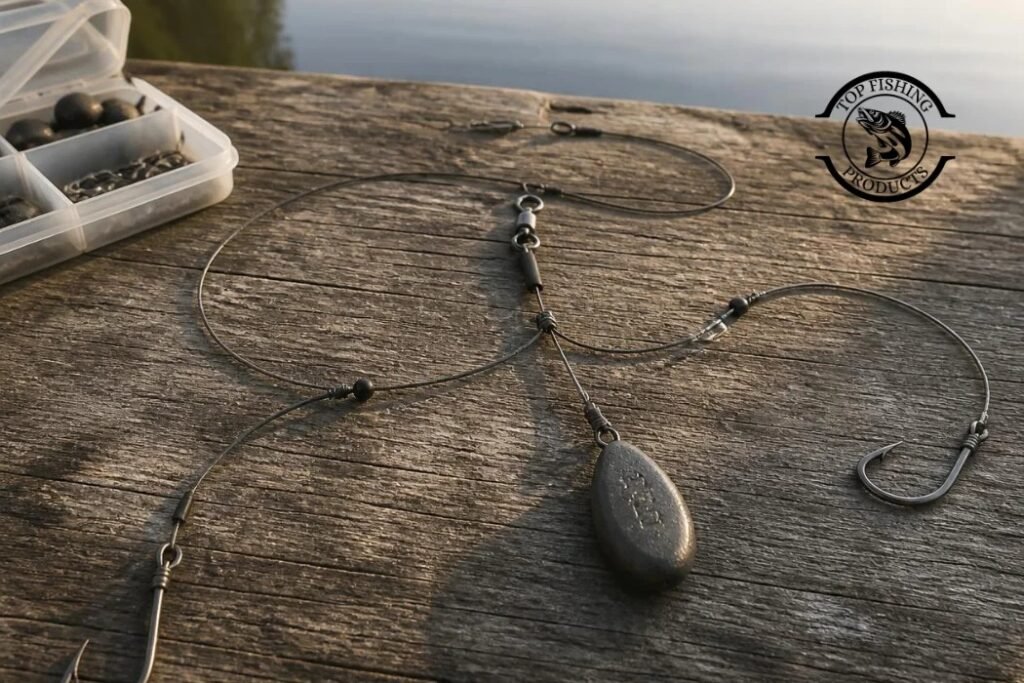
The dropper line holding the sinker is intentionally shorter and often lighter than the main line. This way, if the sinker gets snagged on rocks or debris, the dropper breaks first, and you don’t lose the whole rig, your hook, or your fish.
This rig is also excellent for anchoring in one spot and fan-casting several lines around a boat, since the added weight keeps everything anchored despite current pushing against your line.
Catfish Hook and Sinker Setup: Getting the Sizing Right
Choosing the right hook and sinker size trips up a lot of beginners, and honestly, this part matters more than most people expect.
Hook sizing:
- For smaller channel catfish and general pond fishing, a 2/0 to 5/0 circle hook works well.
- For larger channels, blues, or flatheads, step up to 6/0 to 8/0.
- For trophy-sized blue or flathead catfish, especially with large live bait, 8/0 to 10/0 hooks are common.
Circle hooks are strongly recommended over J-hooks for most catfish rigs. Because they’re designed to slide into the corner of the mouth as a fish turns away with the bait, they reduce deep hooking. This makes handling easier and improves survival rates for fish you plan to release.
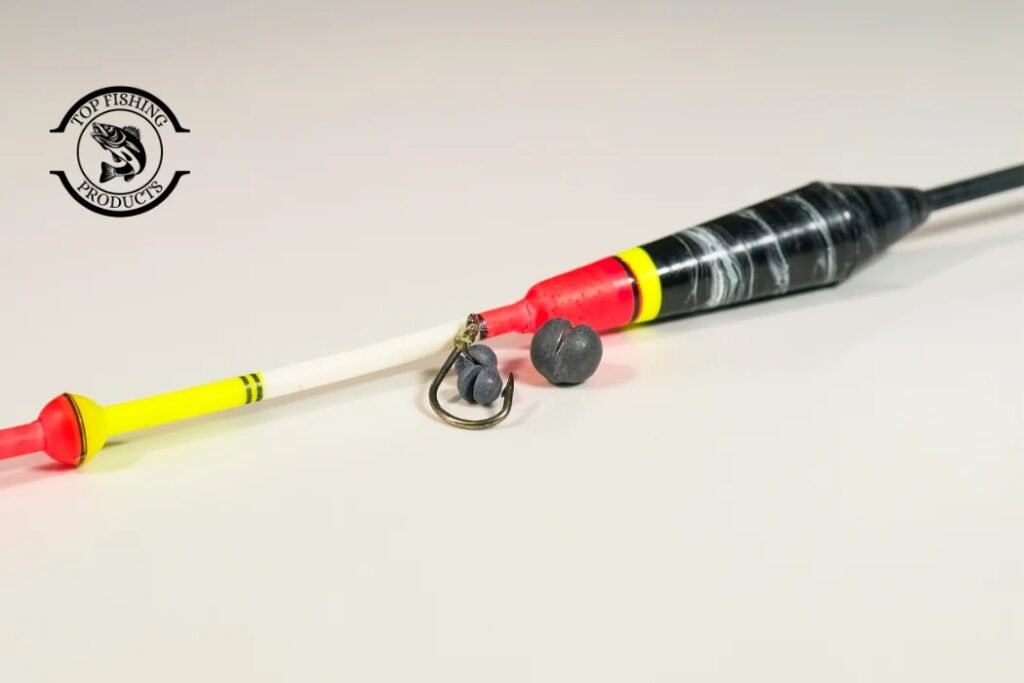
Sinker sizing:
- Still water or slow current: 1/2 to 1 ounce egg sinker.
- Moderate current: 1 to 2 ounces, often switching to a no-roll style.
- Heavy river current: 3 ounces or more, sometimes paired with a three-way rig for better bottom contact.
A simple rule to follow: use just enough weight to hold bottom without excessive slack, but not so much that you can’t feel bites. Too much weight can actually mask the subtle taps that come before a catfish fully commits to the bait.
Matching Your Rig to the Water
Not every body of water calls for the same setup, and this is where a lot of anglers go wrong by using one rig everywhere.
Ponds and small lakes: A basic slip sinker rig with light to moderate weight works fine here. Current is minimal, so a smaller sinker keeps things natural.
Large reservoirs: Depending on wind and structure, either a slip sinker rig or a three-way rig can work. On windy days when your boat is drifting or anchored in open water, the extra stability of a three-way rig helps.
Rivers with strong current: The three-way rig for catfish is usually the better choice here, since it holds bottom more reliably and resists getting swept downstream.
Around structure like brush piles or rocks: A slightly shorter leader on either rig reduces the chance of your hook and bait drifting into a snag.
Bait Pairing for Each Rig
The rig does a lot of the work, but bait selection still matters. Cut bait like shad or skipjack works well on slip sinker rigs because the scent trail spreads while the bait sits nearly stationary. Chicken liver and stink baits also pair well with lighter slip sinker setups in calmer water.
For three-way rigs in current, larger cut bait or live bait like bluegill (where legal) tends to hold up better against the pull of moving water. In addition, using a slightly larger bait chunk on current-heavy rigs helps it stay on the hook longer, since fast water can wash away smaller pieces quickly.
Common Mistakes Anglers Make With Catfish Rigs
A few mistakes show up again and again, even among experienced anglers:
- Using too much weight. This buries the sinker in mud or reduces bite sensitivity.
- Leaders that are too long for the situation. A 36-inch leader in heavy current will drift and tangle constantly.
- Skipping the bead. Without one, the sinker’s knot can wear against the swivel knot and weaken over time.
- Using J-hooks with slow hook sets. Circle hooks are meant to be reeled into, not jerked on. Setting the hook too aggressively with a circle hook can actually pull it out of the fish’s mouth.
- Not checking bottom composition. Rocky bottoms often need a different sinker style than muddy or sandy bottoms to avoid constant snags.
Avoiding these errors alone can noticeably improve hookup rates, even before changing bait or location.
Final Verdict
There’s no single perfect rig for every catfish trip, but understanding your options makes the decision easy once you know the water you’re fishing. For most situations, a well-built catfish rigs setup using the slip sinker method will cover the majority of your fishing days, from quiet ponds to moderate lake conditions. When current picks up or structure gets tricky, the three-way rig steps in as the more dependable choice. Either way, pairing the right hook and sinker size with fresh bait and a little patience is really what turns a rig from “good enough” into one that consistently puts catfish in the boat.
Frequently Asked Questions
What is the best catfish rig for beginners?
The slip sinker rig is the easiest to learn and the most forgiving. It works in most conditions and requires only a few basic components.
Do I need circle hooks for catfish?
They’re not required, but they’re strongly recommended. Circle hooks reduce gut-hooking and generally lead to more solid hookups when paired with a slip sinker or three-way rig.
How heavy should my sinker be?
Use the lightest sinker that still holds bottom in your current conditions. Starting light and adjusting upward is better than starting too heavy.
Can I use the same rig for channel cats and flatheads?
The rig style can stay the same, but hook and sinker size should scale up for flatheads, since they’re typically larger and often taken on bigger live bait.
Is a three-way rig harder to tie than a slip sinker rig?
Not really. It has one more connection point, but it follows a similarly simple process once you’ve tied it a couple of times.