Ask ten catfish anglers what line they run, and you’ll probably get ten different answers. That’s because catfish line choice isn’t one-size-fits-all. It depends on the size of fish you’re targeting, the cover you’re fishing around, and whether you’re casting from the bank, running a trotline, or working jugs across a lake at night. Picking the right catfish fishing line is one of those decisions that seems small until a 40-pound blue cat snaps a rod tip off, or a channel cat wraps you around a submerged log and you’re left holding a broken line instead of a fish.
This guide breaks down what actually matters when choosing line for catfish, how braided and monofilament compare, and how to set up different rigs depending on the style of catfishing you’re doing.
What Makes Catfish Line Different From Other Fishing Line
Catfish aren’t like bass or crappie. They’re heavy, they fight low and dirty, and they love pulling straight into brush piles, rocks, or submerged timber. As a result, catfish line needs to handle abrasion, sudden runs, and a lot of dead weight better than line built for finesse fishing.
Line strength matters, but so does abrasion resistance, stretch, and how the line handles underwater structure. A line that’s technically strong enough on paper can still fail if it frays against a rock or a piece of rebar on an old bridge piling. This is why experienced catfish anglers often prioritize toughness over raw pound-test alone.
Braided Line for Catfish
Braided line has become the go-to choice for a lot of serious catfish anglers, and for good reason. Braided line for catfish offers very little stretch, which means better hooksets even at long distances. This matters a lot when you’re fishing 50 or 60 yards out from the bank and a catfish inhales the bait without moving much.
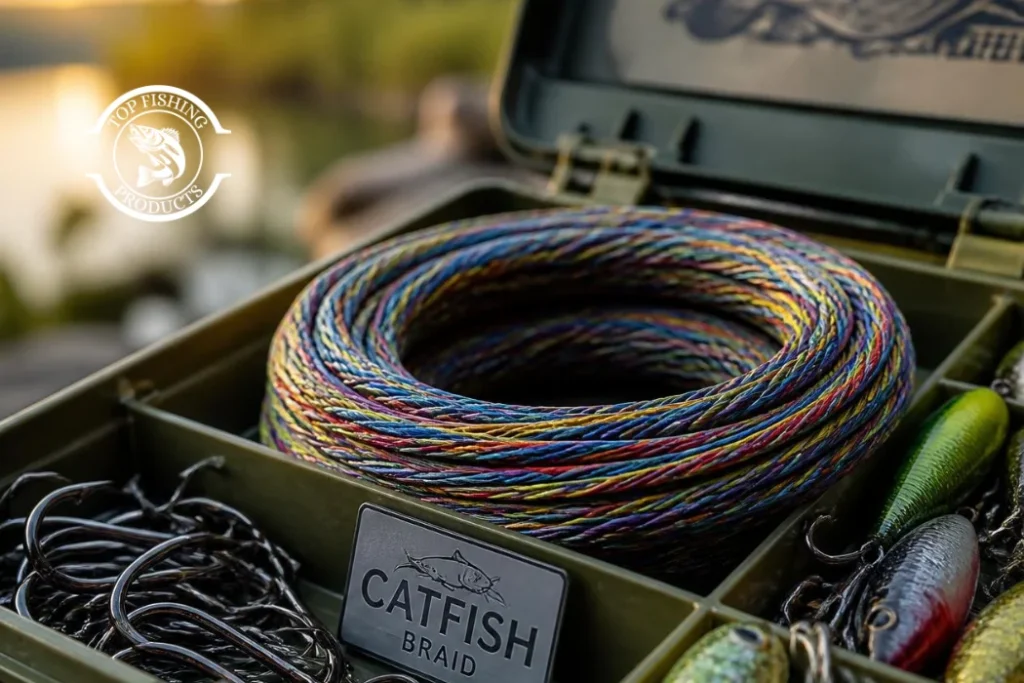
In addition, braid has a much thinner diameter than monofilament at the same strength. A 50-pound braid might be roughly the same thickness as 12-pound monofilament, which lets you spool more line and cast further with less resistance in the water.
Braid also tends to hold up better against abrasion in open water, though it can still fray on sharp rock or shell beds. Therefore, many anglers pair braided mainline with a heavier monofilament or fluorocarbon leader, giving them the best of both: sensitivity and casting distance from the braid, combined with abrasion resistance and a bit of forgiving stretch near the hook.
One trade-off worth mentioning is cost. Braid is more expensive than monofilament, and it can be harder to work with for beginners since it doesn’t hold knots the same way. Learning a few braid-specific knots, like the Palomar or an improved version of the uni knot, makes a real difference here.
Monofilament Fishing Line for Catfish
Monofilament fishing line remains a solid, budget-friendly option, and it’s still what a lot of bank anglers and trotline setups rely on. Mono has natural stretch, which acts like a shock absorber when a big cat makes a sudden run. This can actually help prevent hooks from tearing out of soft-mouthed fish, especially with circle hooks.
Mono is also more forgiving to tie knots with, floats better than braid, and is generally cheaper per yard. For anglers just getting into catfishing, or for rigs where a little bit of give is actually useful, monofilament remains a reliable, no-frills choice.
However, mono has a thicker diameter for the same strength compared to braid, and it loses some sensitivity over long casts. It also degrades faster under UV exposure, so line left on jugs or trotlines for extended periods should be checked and replaced more often than braided setups.
Braided vs Monofilament: Quick Comparison
| Feature | Braided Line | Monofilament Line |
| Stretch | Very low, better hooksets | Moderate, acts as shock absorber |
| Diameter for same strength | Thinner | Thicker |
| Abrasion resistance | Good in open water, weaker on sharp rock | Moderate, wears with UV exposure |
| Knot-tying ease | Harder, needs specific knots | Easier for beginners |
| Cost | Higher | Lower |
| Best use | Long casts, open water, big cats | Bank fishing, trotlines, budget setups |
What Is the Best Line Setup for Catfishing?
There isn’t a single universal answer, since the best line setup for catfishing depends heavily on your target species and fishing method. That said, a few combinations consistently perform well across most situations.
For rod-and-reel catfishing in open water, a braided mainline in the 30 to 65-pound range paired with a 40 to 80-pound monofilament or fluorocarbon leader covers most channel and blue catfish scenarios. The leader absorbs abrasion near structure while the braid handles distance and sensitivity.
For bank fishing near heavy cover, straight monofilament in the 20 to 30-pound range is often enough for channel cats, while flathead and blue cat anglers targeting bigger fish near timber often step up to 40-pound mono or heavier to reduce the risk of break-offs.
For trotlines and jug lines, which we’ll cover in more detail shortly, heavier monofilament is generally preferred because of its abrasion resistance and lower cost when running dozens of hooks at once.
Meanwhile, spinning reel setups have their own considerations worth addressing separately, since line lay and casting mechanics differ from baitcasting gear.
Best Catfish Line for Spinning Reel
Spinning reels handle line differently than baitcasters, which affects line choice. The best catfish line for spinning reel setups is usually a lighter braid, somewhere in the 20 to 40-pound range, since heavier braid can dig into itself on the spool and cause frustrating wind knots.
For anglers using monofilament on spinning gear, staying in the 12 to 20-pound range generally casts more smoothly and reduces line twist, which is a common complaint with mono on spinning reels. If you’re targeting larger blue or flathead catfish on spinning tackle, adding a heavier fluorocarbon leader helps compensate for lighter mainline without sacrificing castability.
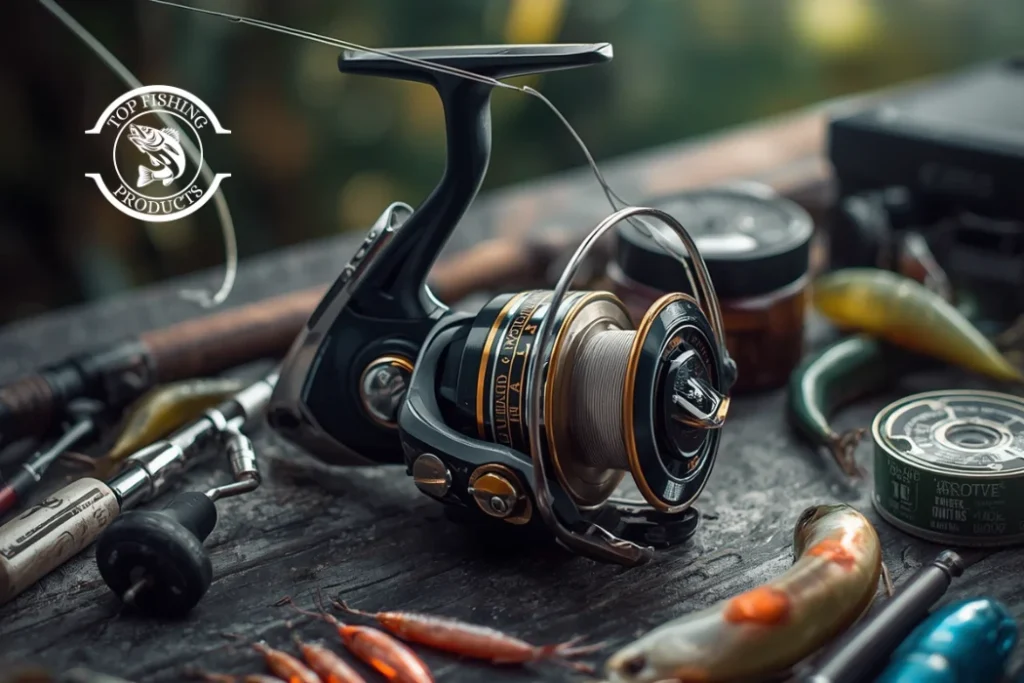
Line twist is one of the most common frustrations with spinning reels for catfish. This usually happens from reeling under tension or using a swivel-free rig with spinning bait. Adding a small barrel swivel a foot or two above the hook solves most of this problem.
Catfish Trotline Setup and Line Considerations
A catfish trotline is a passive fishing method where a main line, often heavy monofilament or nylon cord, is strung across a section of water with multiple hooks hanging from drop lines. This method is popular for covering a lot of water without constant attention, particularly for anglers targeting numbers of channel catfish overnight.
For the mainline, many anglers use 100 to 200-pound monofilament or braided nylon cord, since it needs to hold up against multiple fish pulling simultaneously, along with debris and current. The drop lines, which connect the hooks to the mainline, are usually lighter, often in the 40 to 80-pound range, so that if a hook gets snagged, it’s the drop line that breaks rather than the entire trotline.
Spacing between hooks typically runs about three feet apart, which helps prevent tangled lines when multiple fish are hooked at once. Also, checking local regulations before setting a trotline is essential, since many states have specific rules about hook limits, tagging requirements, and check-in intervals.
Catfish Jug Lines
Catfish jug lines work on a similar principle to trotlines but use individual floating jugs instead of a connected mainline. Each jug has its own length of line, usually monofilament in the 40 to 60-pound range, with a single hook and enough weight to keep the bait suspended at the right depth.
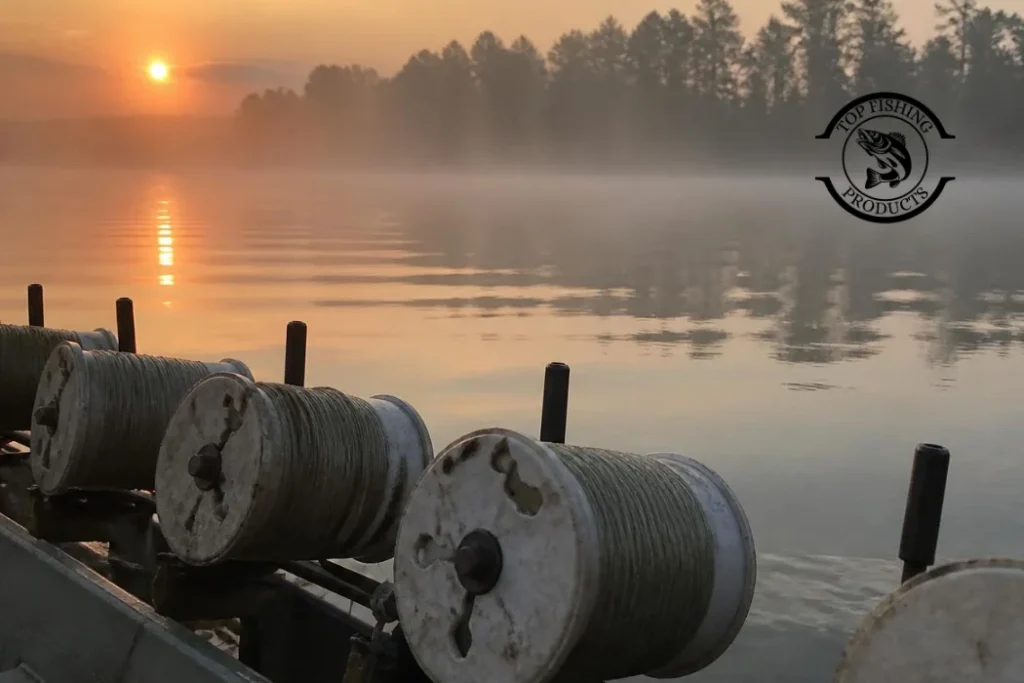
Jugs are typically spread across open water and checked periodically, which makes them a popular method for covering large areas of a lake overnight. Monofilament is generally preferred here over braid, largely because of cost and because UV degradation is less of a concern for line replaced regularly each season.
As with trotlines, checking state regulations matters, since jug fishing rules vary widely and some states require jugs to be marked with the owner’s information.
Common Mistakes Anglers Make With Catfish Line
One of the most frequent mistakes is going too light for the conditions. An angler might land plenty of average-sized channel cats on 12-pound line, but the first time a big blue cat or flathead grabs the bait near cover, that same line snaps immediately.
Another common issue is neglecting line maintenance. Monofilament left in direct sunlight for a full season weakens significantly, even if it looks fine. Therefore, running a hand along the line periodically to check for rough or fuzzy spots, especially near the leader connection, can prevent losing a fish to a line failure that could have been caught early.
Using the wrong knot is another overlooked problem, particularly with braid. A standard knot that works fine on monofilament can slip on braided line, so learning braid-specific knots is worth the extra ten minutes of practice.
Finally, some anglers skip a leader entirely when using straight braid, which leaves the line vulnerable right at the point of most contact with structure and fish teeth. A short mono or fluorocarbon leader, even just two to three feet, dramatically reduces break-offs near cover.
Final Verdict
Choosing the right catfish fishing line comes down to matching your gear to the fish and the method you’re using. Braid offers strength, distance, and sensitivity for open-water casting, while monofilament remains a dependable, budget-friendly option for bank fishing, trotlines, and jug lines. Whichever setup you choose, pairing the right line with a suitable leader and checking it regularly will save far more fish than any single piece of tackle could on its own.
Frequently Asked Questions
What pound test line is best for catfish?
It depends on species and location, but 20 to 30-pound monofilament or 30 to 50-pound braid covers most channel catfish situations. Bigger blue or flathead catfish near heavy cover often call for 40-pound mono or 50 to 65-pound braid.
Is braided line better than mono for catfish?
Neither is strictly better, since each has different strengths. Braid offers thinner diameter and better sensitivity, while monofilament offers natural stretch and easier handling, particularly for beginners.
How often should catfish line be replaced?
Monofilament used regularly should be replaced every few months, or sooner if it’s been exposed to a lot of sun. Braid lasts much longer, often a full season or more, since it resists UV damage better.
Do I need a leader with braided line for catfish?
Yes, in most cases. A monofilament or fluorocarbon leader protects against abrasion near structure and reduces the chance of a break-off close to the fish.